Homeals
A Home Cooking Marketplace Platform
Project
The Problem
Homeals’s idea is inspired by the situation around COVID-19. During the 2019 pandemic, many restaurants have closed and many people lost their jobs, including those from the hospitality industry. Around an estimated 700,000 people lost their jobs in 2020 during the pandemic. This causes many people to work from home, but also some people to stay at home jobless. Because of this, many actually start to cook from home and learn to cook different new recipes. Many people then started trying to sell their food online, including their own traditional food if they are immigrants. This happens on many online platforms such as Facebook, Instagram and Gumtree in Sydney. Many of these sellers are not food safety certified, which raises a lot of concerns. While the reports of food poisoning are rare, there could be a better way that these home cooks may be able to sell their food. Many of these food are also being sold using plastic containers.
The platform is also inspired by food nostalgia as well as food multiculturism in Sydney. While there are a lot of varieties of cuisines in Sydney, the availability of each type of cuisine can be limited. Homeals can help to provide access to places which might not have restaurants and cuisines in the area.
Research
Qualitative research methods have been the primary research methodology used in the project. This involved the acquisition of data through:
Competitors’ Analysis: Analysing competitors and how food is being sold online. Heuristics are gathered to see what would be required for an MVP.
User research: Interviews had been conducted to understand how home-based businesses are currently being run and gather findings to create a user-centred approach to the design outcome. The participants included home cooks who are already running their businesses, home cooks who potentially want to run a business & potential customers. The interviews conducted were through face-to-face or Zoom interviews.
Usability Testing: Usability testing has been conducted through user tasks (from the user flow of the app) and prototype feedback to gather findings to create a more user-centred approach to the design outcome. General feedback on the brand and product was asked to the participants. The participants ranged in age group and other diverse factors. The usability testing were conducted face-to-face using 2 devices (moderated) or online individually (unmoderated). The moderated testing involves a moderator that asked the user to perform tasks in the prototype. Both test methods asked the user for their detailed feedback on the prototype as well as suggestions on improving it. For the face-to-face interview, one of the devices is for the user to click on the working prototype, and the other is for recording how the user moves through the prototype.
Publications: Collection of information through analysis of existing publications, research papers, government regulations for food-based businesses. Analysis of existing publications and research papers was conducted in order to gather more information (to see if the product is viable) about the accessibility of diverse food in Australia, food in relation to digital technology such as apps, as well as usability testing methods to set up a more seamless experience in the usability testing environment and web accessibility to create an effective design system.
Quantitative research methods have been the secondary research methodology used in the project. This involved:
User Surveys: Surveys are used to learn more about the potential consumers’ perception from a broad set of individuals through survey research. This helped to confirm hypothesises and theories as well as gather insights on what the users want from the platform and relations to their willingness and conditions to buy home-cooked food. The survey was distributed using Google Forms to people from different areas in Sydney from different backgrounds and demographics in order to gather data from diverse audiences.
Post-test Questionnaire: A post-test questionnaire was also sent to ask how each participant in the user testing feel about each process and the ease of use. The questions will have close-ended questions asking for the evaluation of the usability. This is essential to identify problems in order to fix them and improve the usability and ease of use.
Competitors' Analysis
Facebook Marketplace
Facebook Marketplace is home to hundreds of people’s home cooking sales. While this is the case, Facebook does not actually support the selling of food as it does not even have the Food section in the categories filters. Most of the sellers are also do not mention whether they are licensed in food safety.
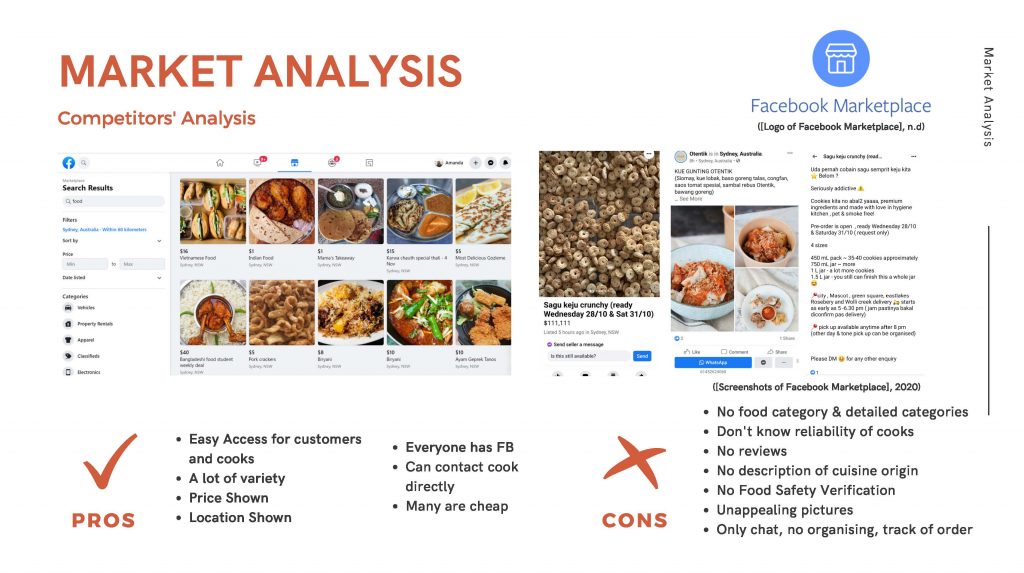
Competitors’ Analysis for Facebook Marketplace.
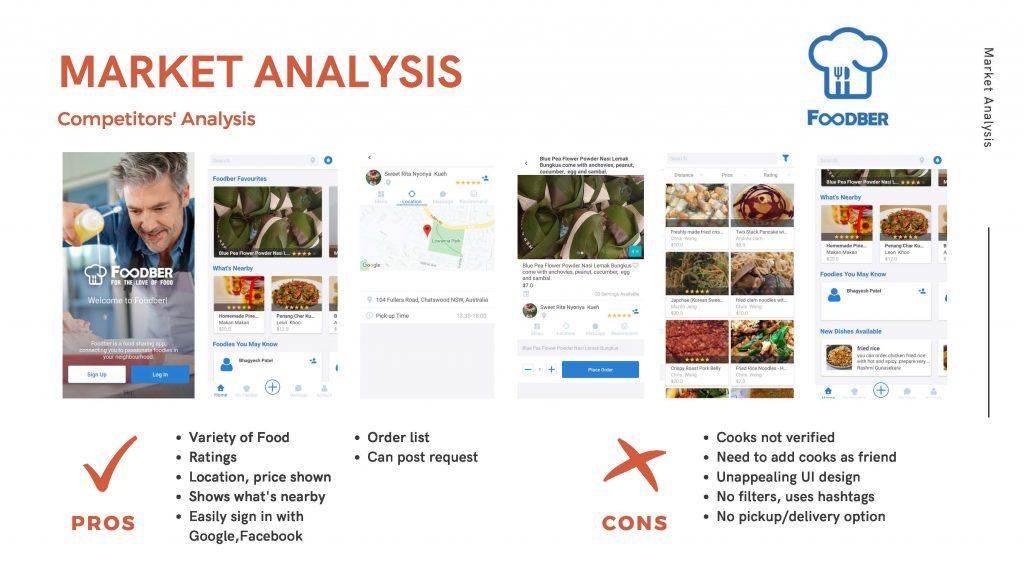
Competitors’ Analysis for Foodber.
Research Findings
Potential Home Cooking Sellers
One of the main target markets for Homeals are potential home cook sellers. They are basically people who are passionate about cooking and wants to sell their food, but just have not gotten around to it. A total number of 3 people were interviewed and these are the summary of the data collected.
- Want to share their food,
- (usually ethnic/cultural)
- Don’t know or scared to start
- Food Safety Concerns
- Want to do small orders first
- Share first through friends
- Want Extra Income
Existing Home Cooking Sellers
Existing home cook sellers already exist and already have their own small home businesses. Knowing how they operate will be crucial to the research so interviews were done in order to find out about their habits, behaviours and attitudes towards the current existing platforms and our platform amongst other factors.
- Sell to people near living area & ethnic communities
- Cooks alone/duo, owner
- All started cooking since very young
- Motivations: restaurants don’t sell the food, hobby
- Contacting customers through chatting
- 1 out of 4 have food safety certificate, recommends it to all
- Pickup points, delivery for large batches
- Food visuals more important than packaging /branding
- Menu: 9-10 dishes/dish types, rotation so customers not bored
- Social media is main platform, easy advertising
- Packaging supplier: mostly plastic because cheap
- Cooking few batches a week, intensive grocery, 50-150 sales a week
- Food shared through ethnic communities who share it to others (Note: potential growth through branding)
- Writing orders manually through notes, paper, sometimes forget (Tedious)
- Marketing ideas: coupons, special deals for big batches

Memorable Quotes from Interviews.
Potential Customers
45 People participated in a research survey about habits & perceptions towards home- cooked food as well as their attitudes towards online home-cooked meals.
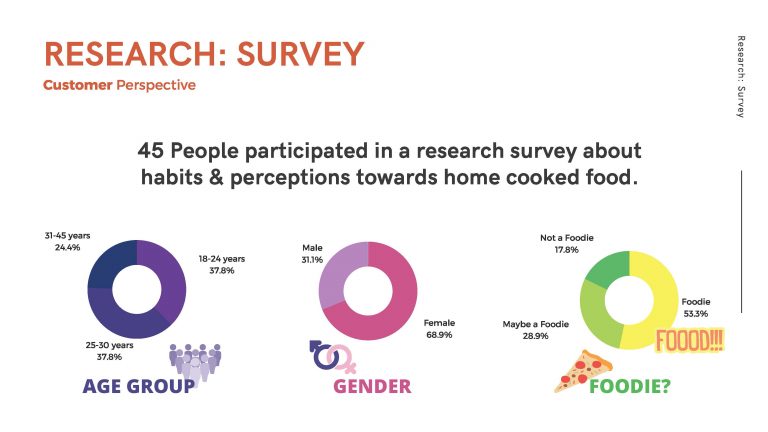
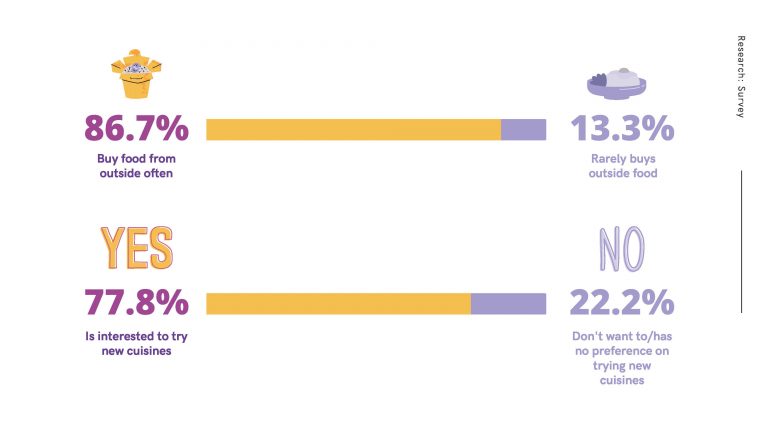
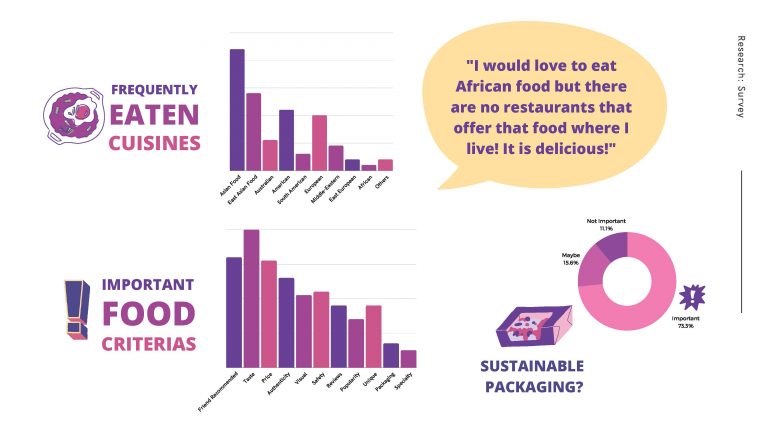
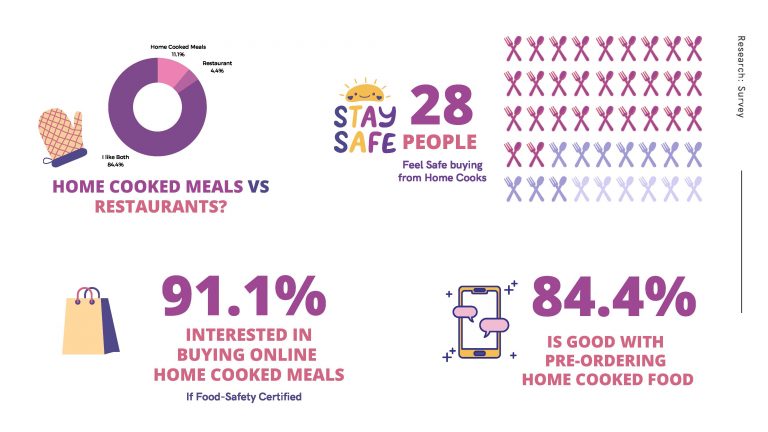
Survey for potential users/customers.
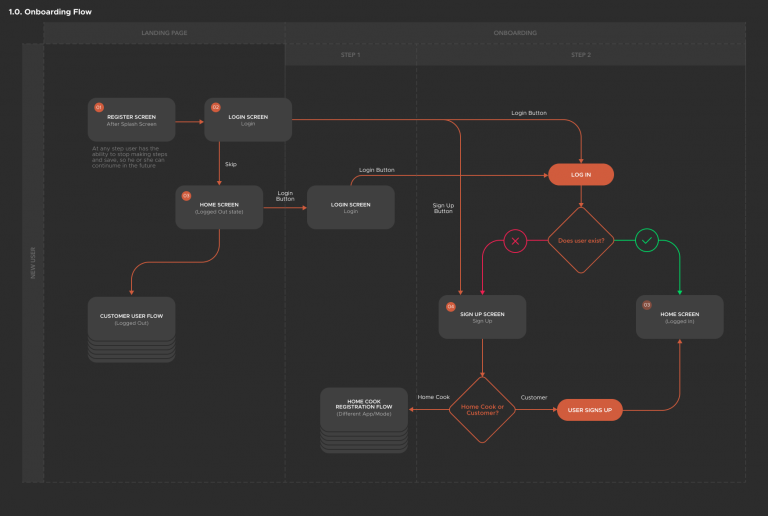
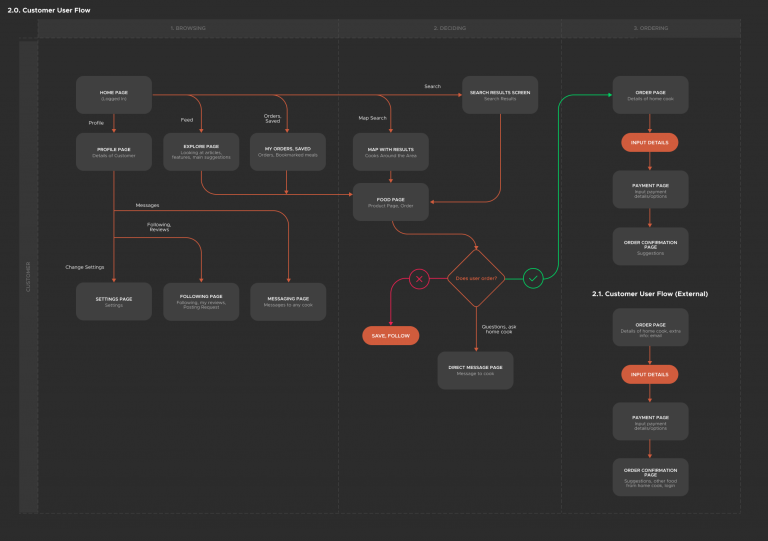
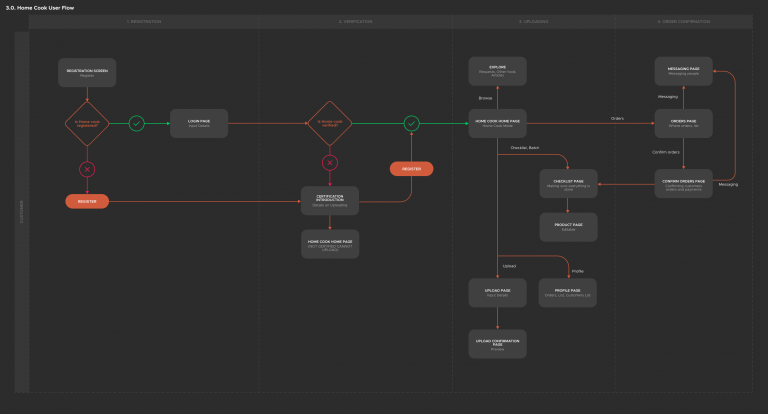
User Flow Maps for Onboarding, Customers & Home Cooks.
Personas
2 main user personas are summarised from the findings: Home Cooks & Customers.
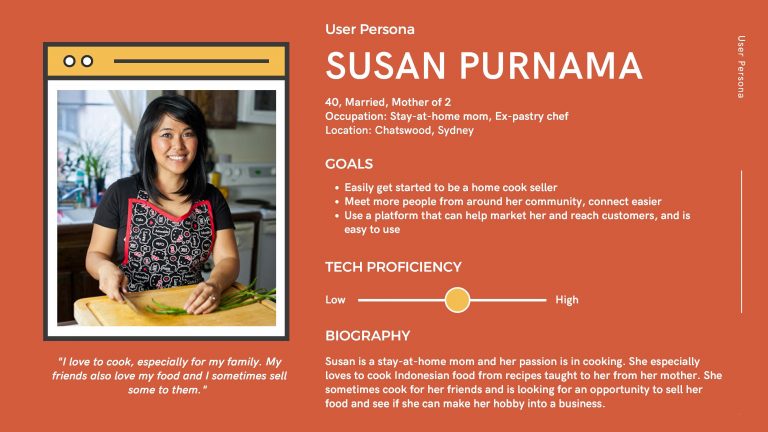
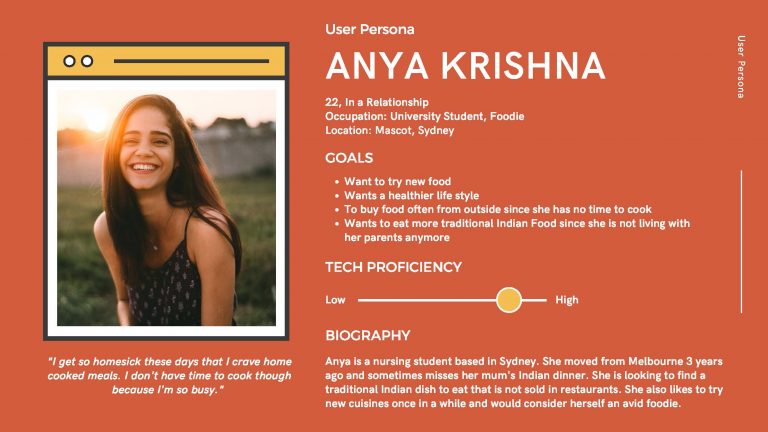
Persona profiles of the users of Homeals.
Behavioural Archetypes
Another way to segment the users or target market, Behavioural Archetypes is a method that can be used on top of user personas.
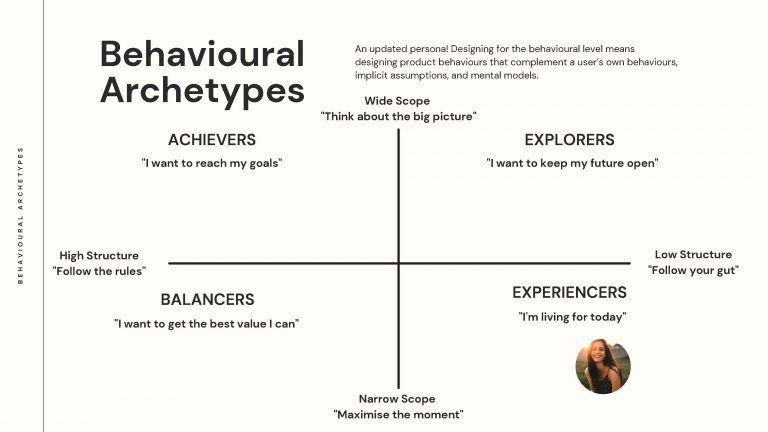
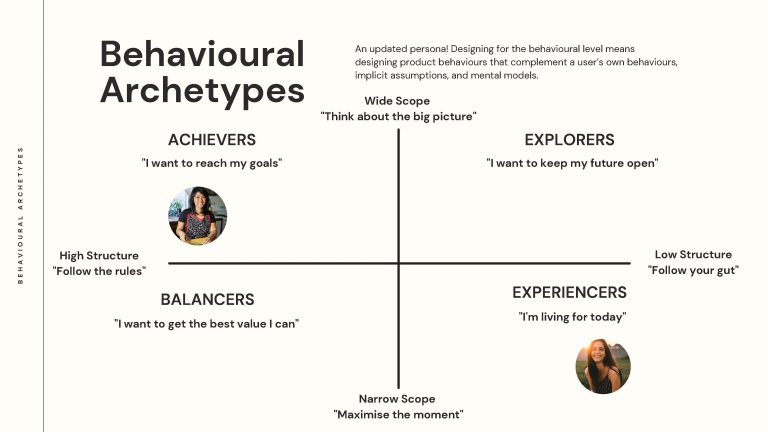
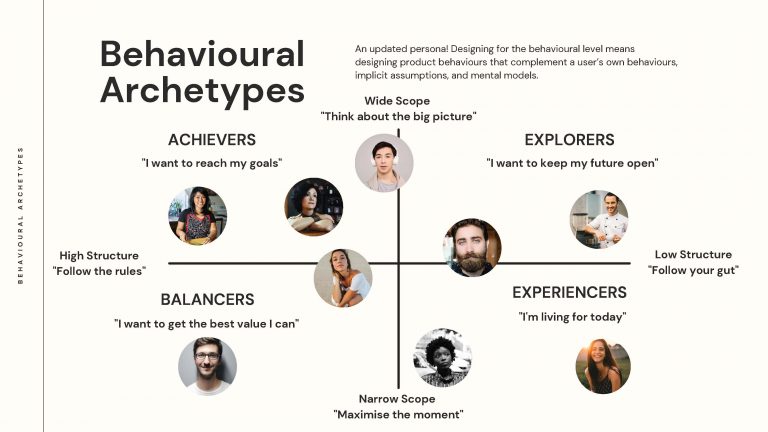
Homeals will have different people with different mindsets, and this method will help to analyse, create and develop features that will cater to prioritised users.
Prototype
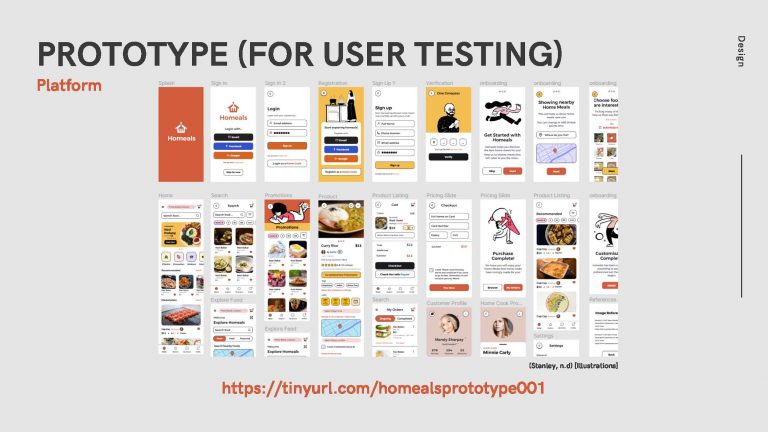
User Testing Results & Survey Results
User testing has been done to identify problems, issues and analyse the low-fidelity prototype that has already been made. A compilation and summary of data has been gathered from user testing of the low-fidelity prototype.
USER TASKS
Signing Up
Q: You’ve downloaded an app called Homeals. How would you create an account and start your journey with the app?
Success Criteria: Selects Create New, register with email, click sign up, verify, next, complete customisation.
Result: All successes. (User friendly, easy to follow to create new users and sign up. The button and icon is clear enough to navigate the app)
Finding Nearby Food
Q: You want to see food that can be found near around you, how would you do that?
Success Criteria: In Homepage, click explore, click Search Nearby food.
Result: All successes but not easily. Feed should be in a separate tab where we can see what our friends are posting. Like Instagram.
Purchasing Food Process
Q: You want to purchase food from the app, how would you do that?
Success Criteria: Click on any food item, scroll down and checkout, click Checkout, Pay Now.
Result: All successes. Should be easy to go back to the main menu if users change their minds. But the overall purchasing experience is straightforward and easy to use.
Contacting Home Cook
Q: You want to message the home cook who is cooking your food, how would you do that?
Success Criteria: Go to My Orders, click the message icon.
Result: All successes but not easily. Perhaps my order can be combined with profile to make it more user friendly. Most online app combine orders within the drop down menu.
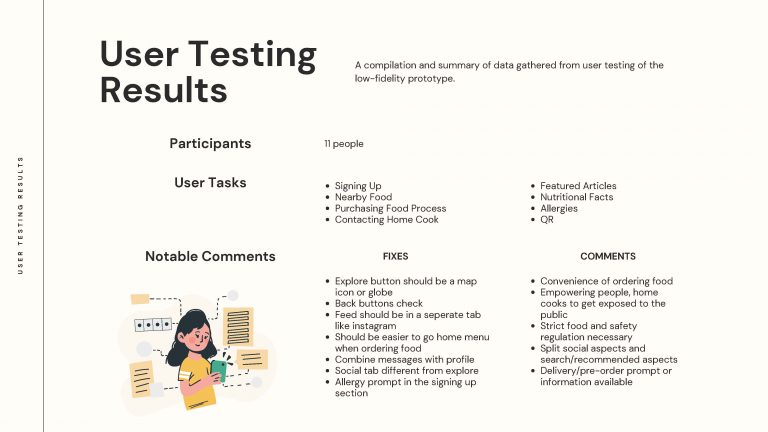
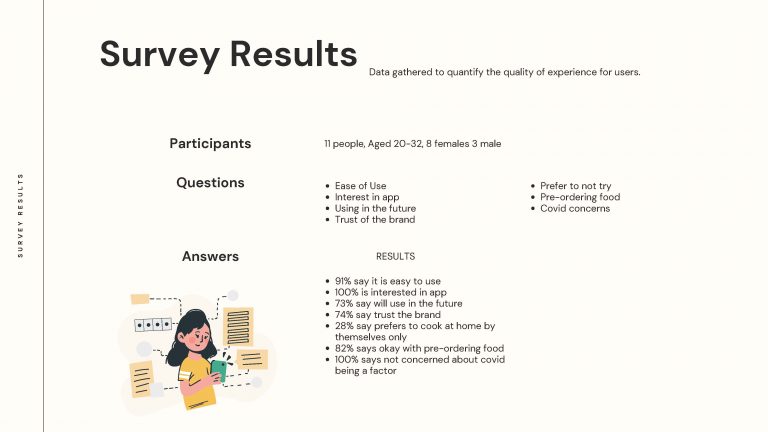
Results on user testing & survey.
Platform Outline
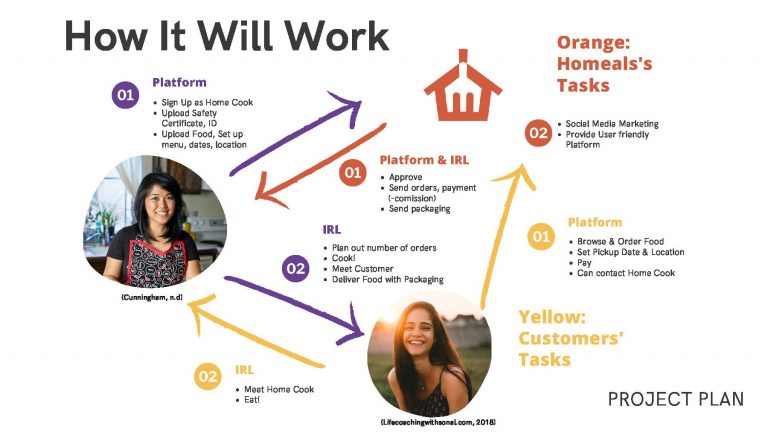
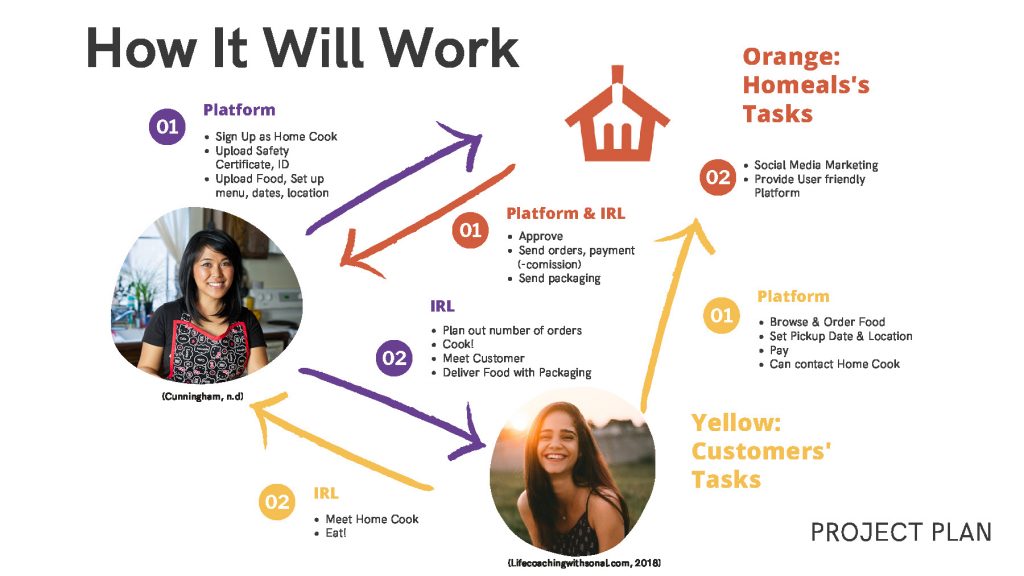
The figure above shows how Homeals will work in relation to home cooks selling their food, customers buying home cooked meals as well as the Homeals company itself.
Purple: Home Cooks’ Tasks
The purple Arrows shows the Home cooks’ user journey. First off, the user would have to sign up as a Home Cook on the platform, upload their certificate, ID and be verified by Homeals. Then they would be able to upload their meals, set up their menu with pickup dates and location of pickups. They are able to confirm and communicate with customers and meetup with them or deliver the food with the Homeals packaging.
Yellow: Customers’ Tasks
The yellow arrows show the customers’ user tasks. The customer will first be on the platform and can decide to sign up or not. They will browse and order the food from the home cook, and set up a pickup date and location for each food. Afterwards they will pay and can contact the home cooks for any enquiries. On the pickup day they will be able to meet the home cook and pickup the food!
Orange: Homeals’ Tasks
For Homeals, the platform will approve home cooks and verify them. The platform will inform the home cook of all orders and send payment with commission taken. Homeals will also send the efficient amount of packaging for orders and continuously market through social media and keep updating the platform to make it as updated and user friendly for both home cooks and customers.
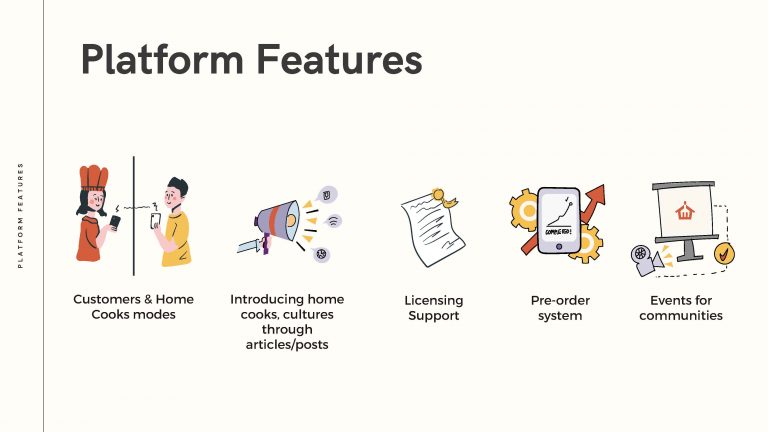
Features that are important from the findings of the user research.
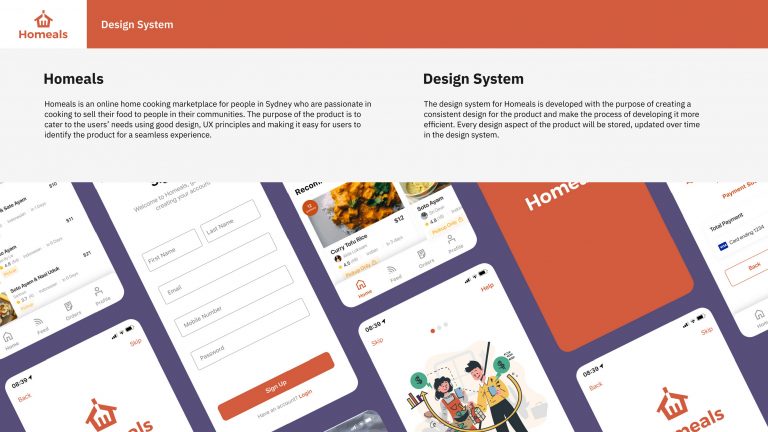
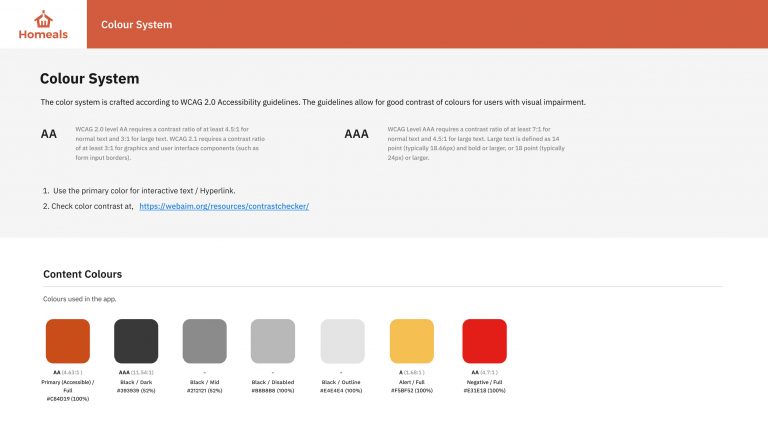
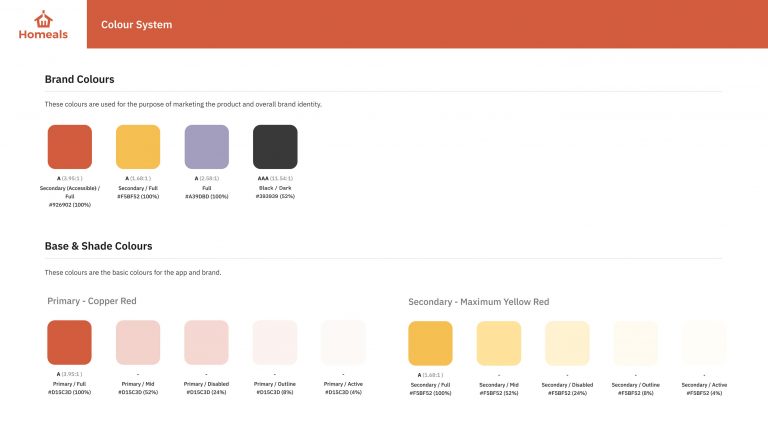
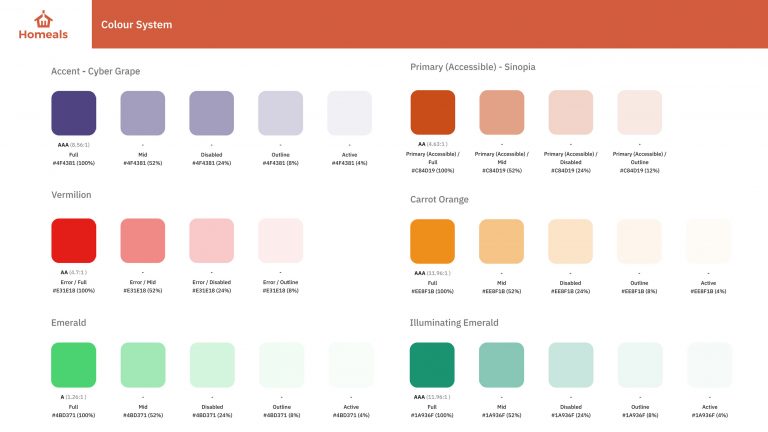
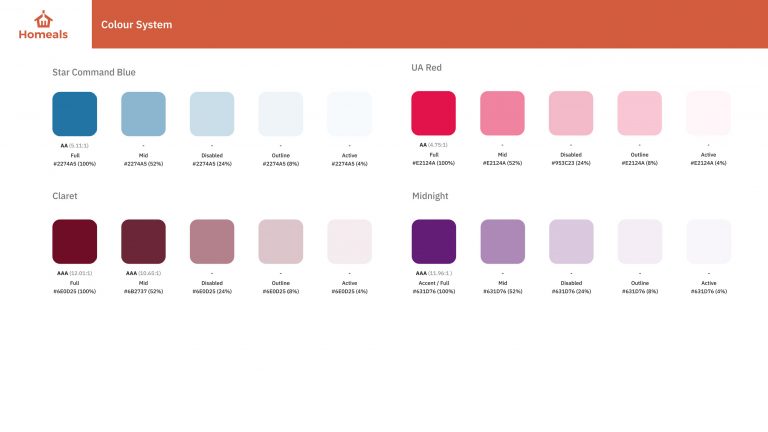
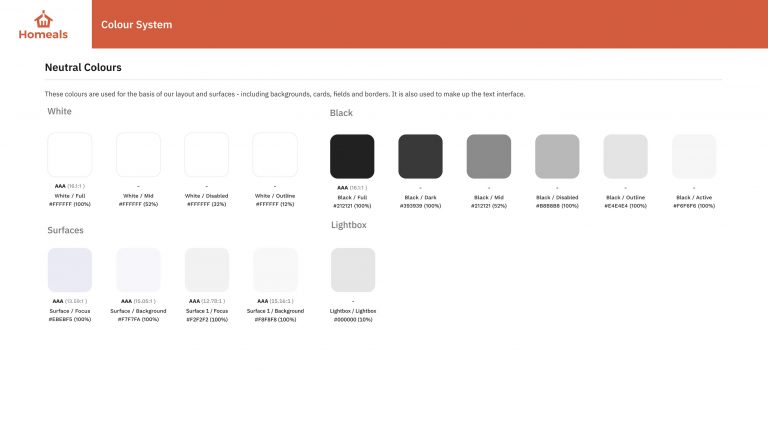
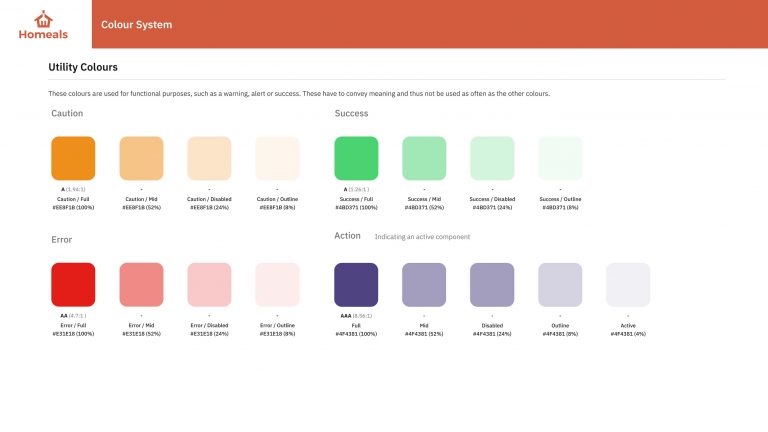
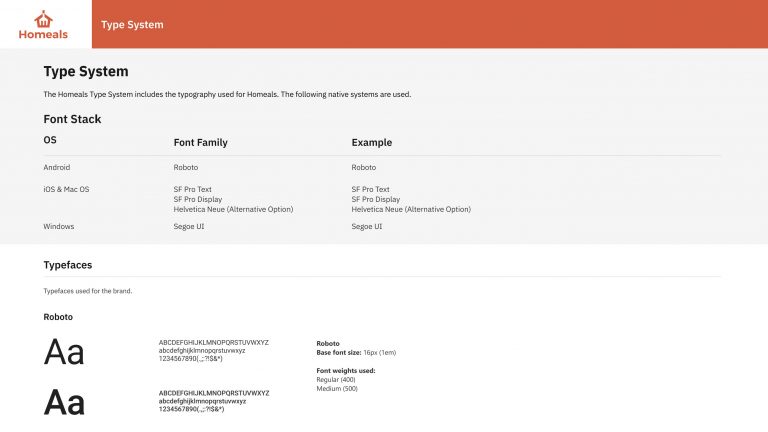
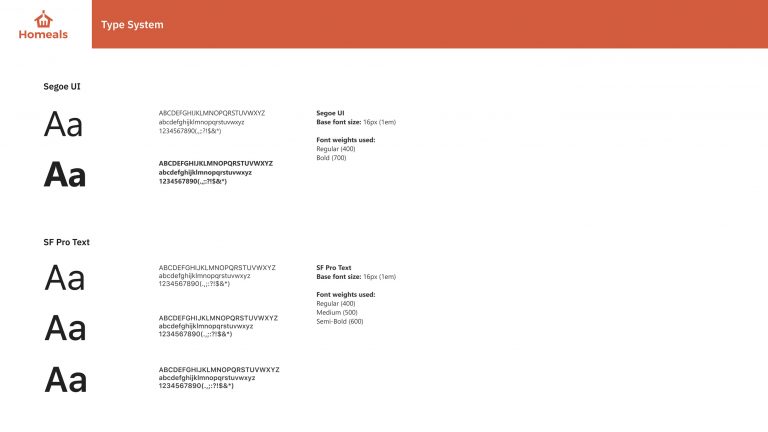
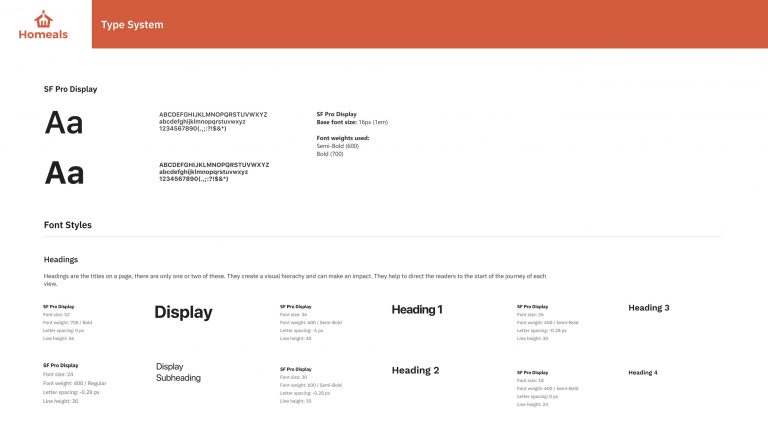
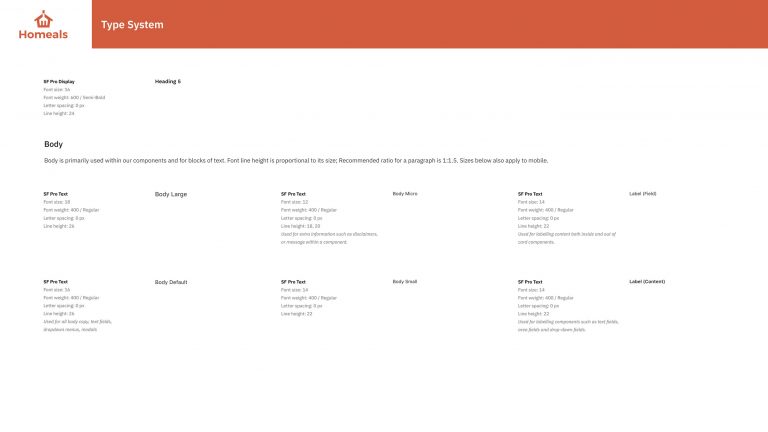
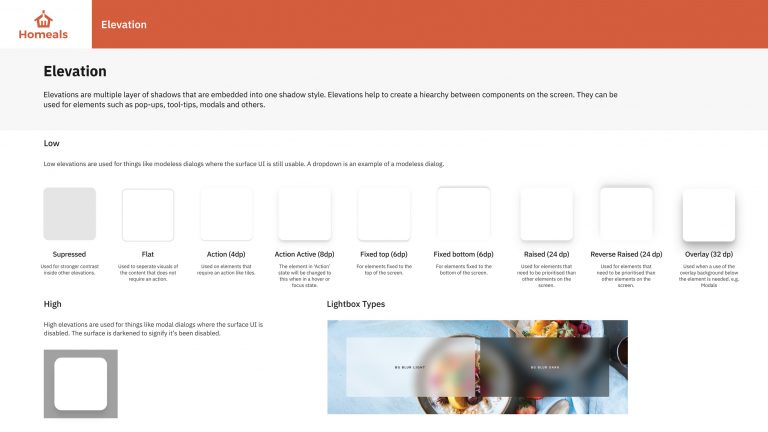
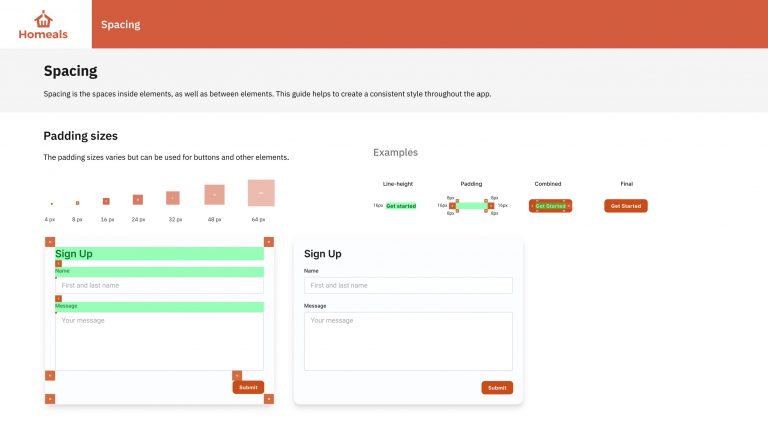
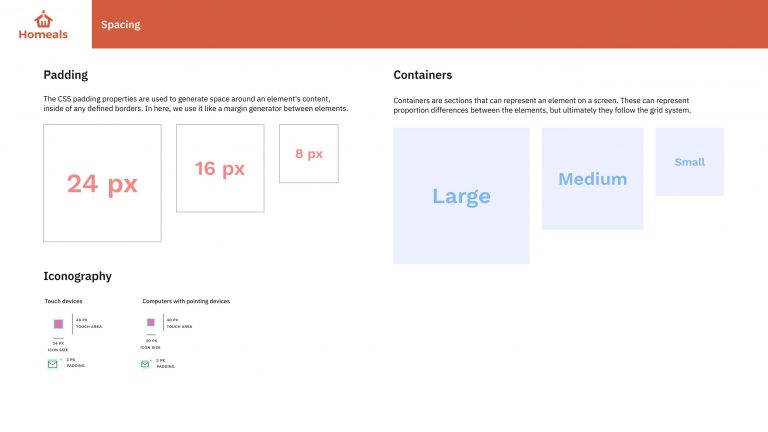
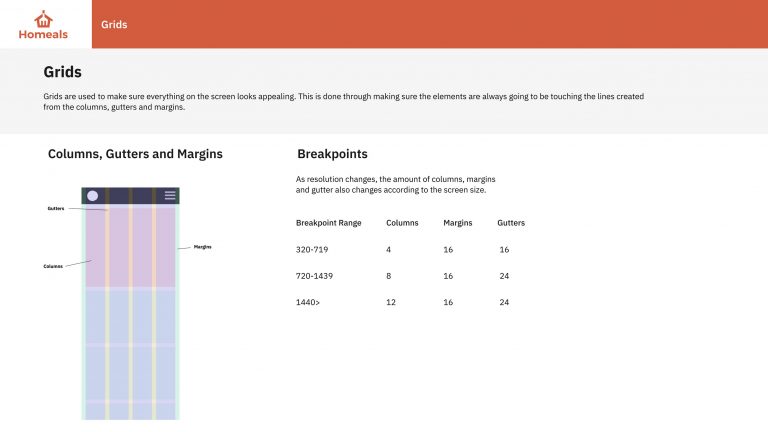
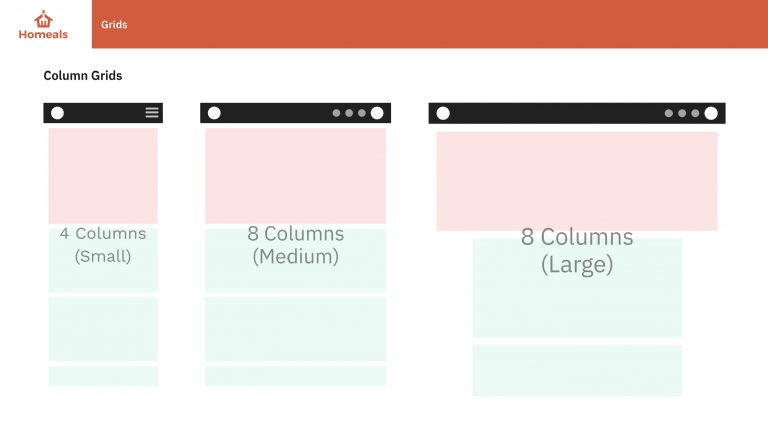
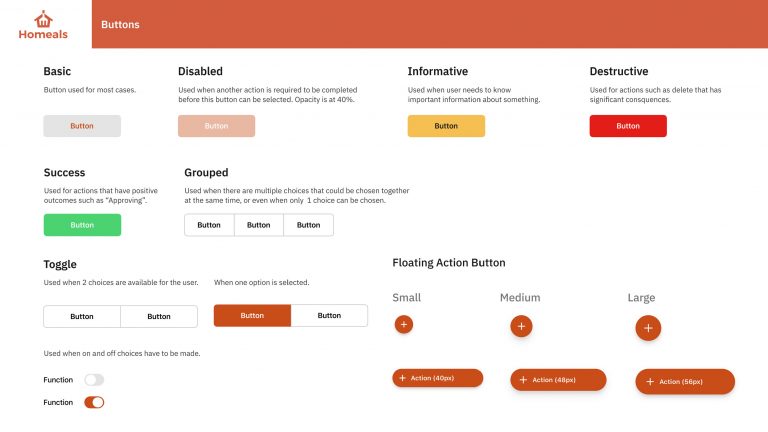
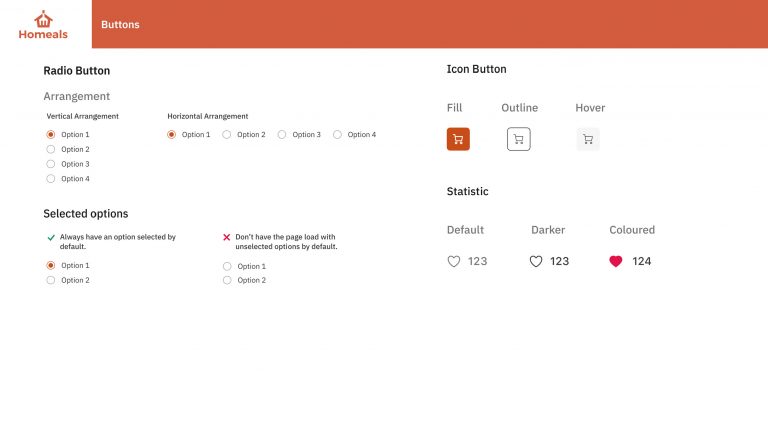
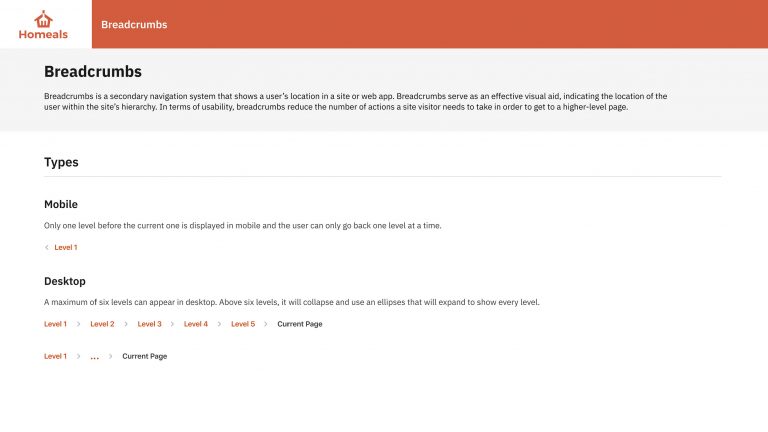
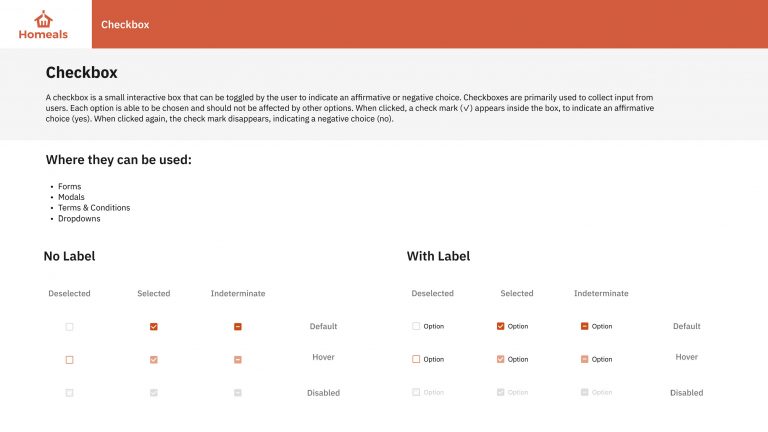
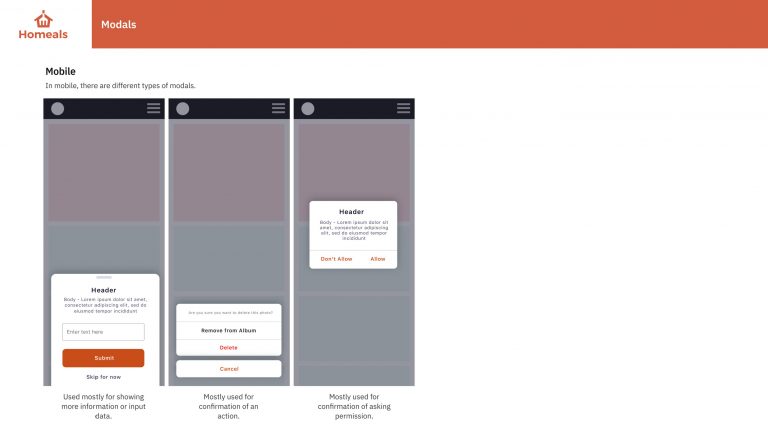
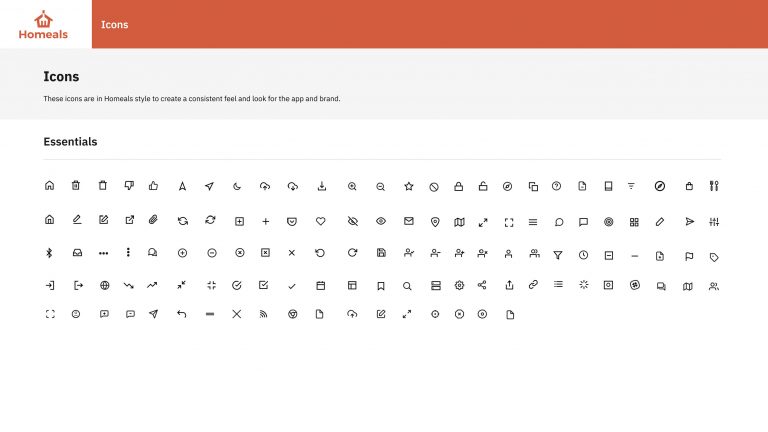
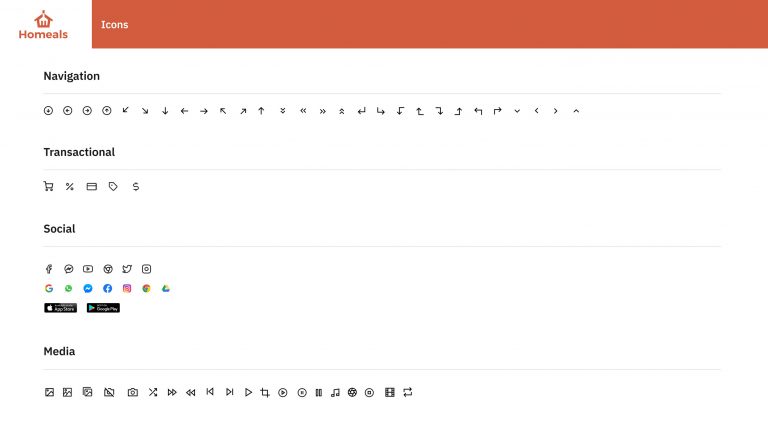
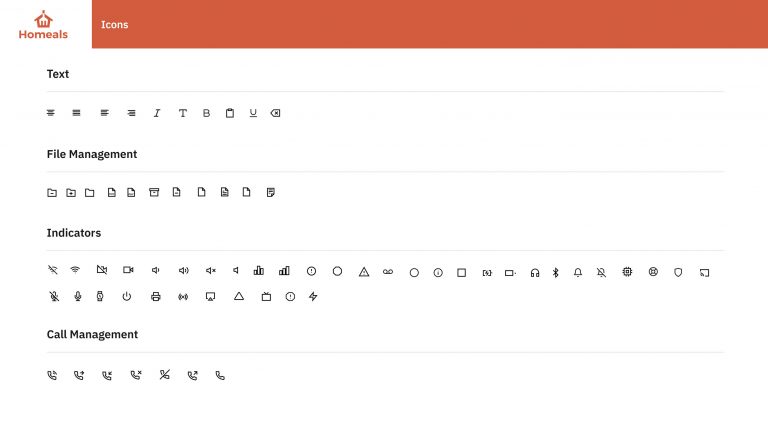
Design System
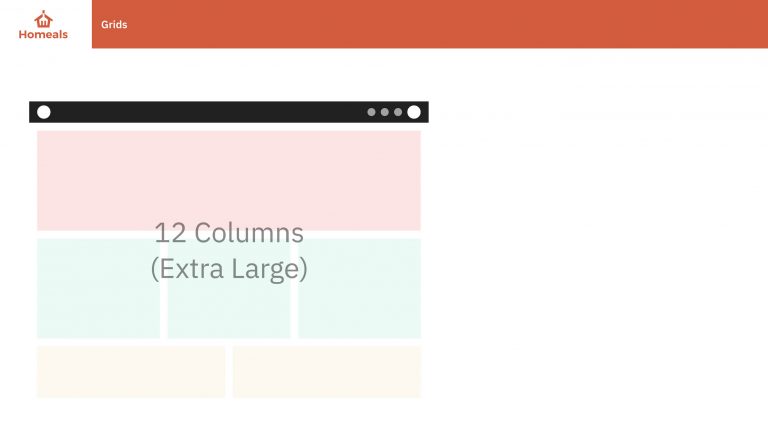
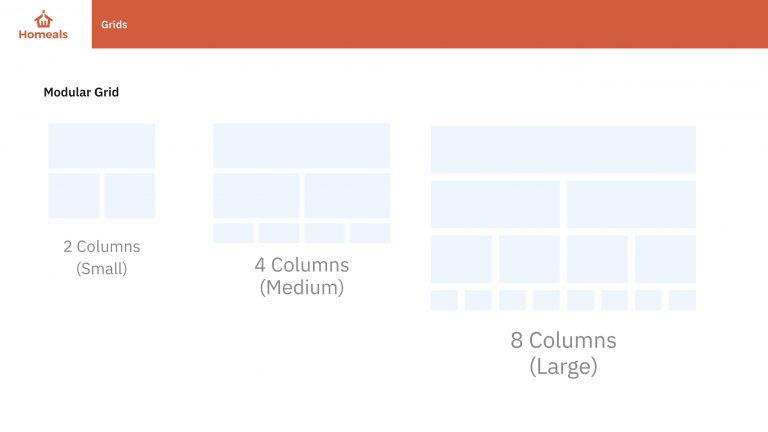
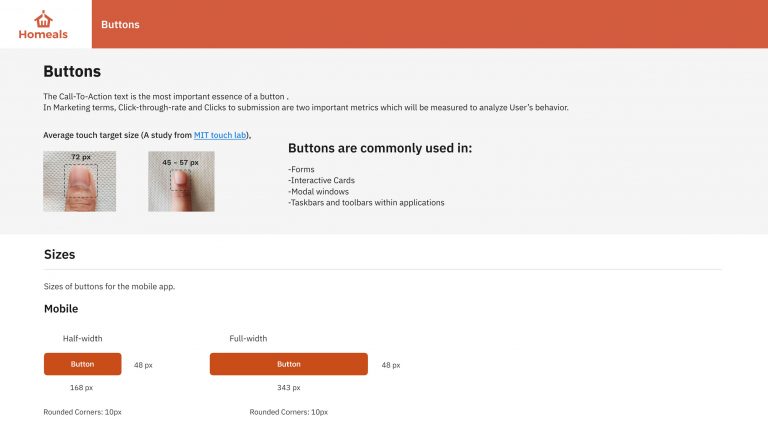
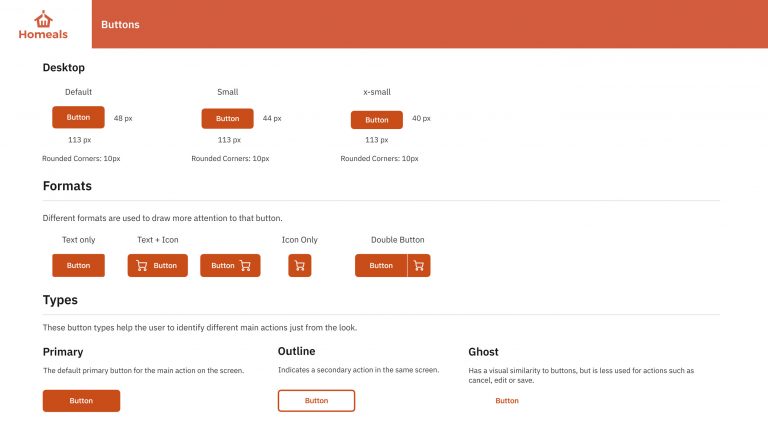
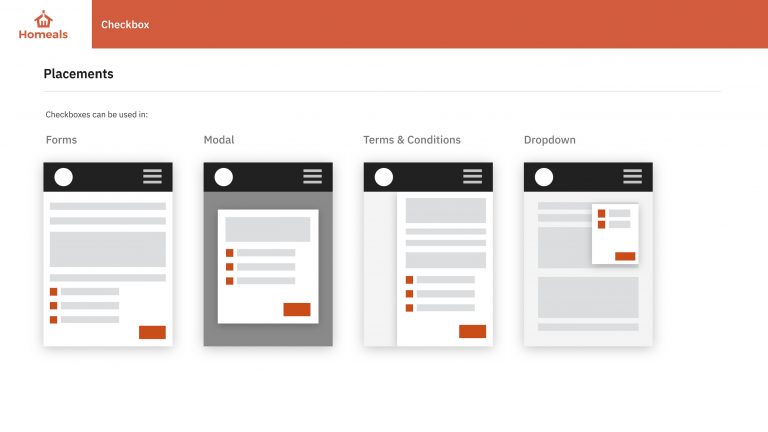
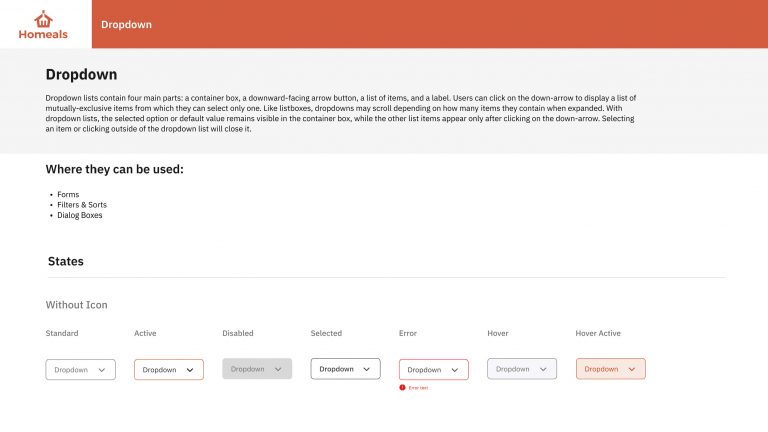
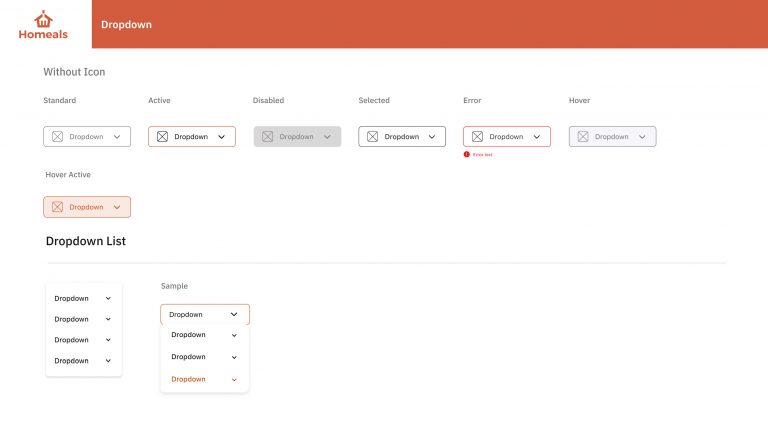
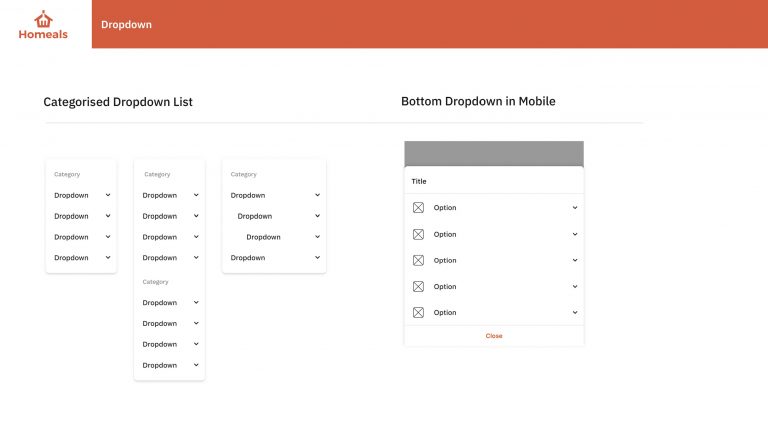
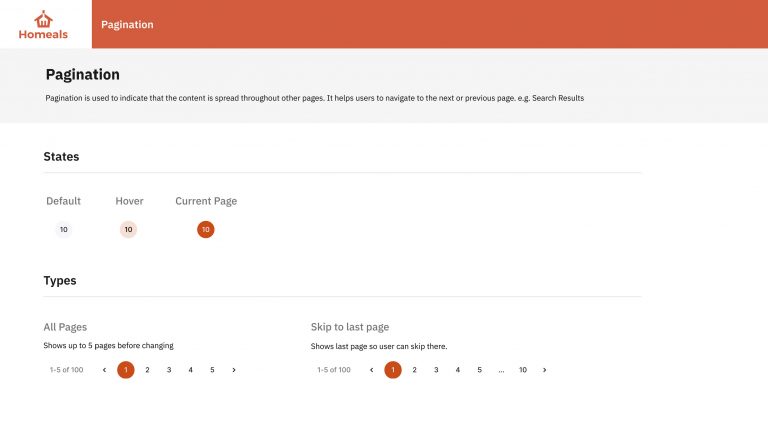
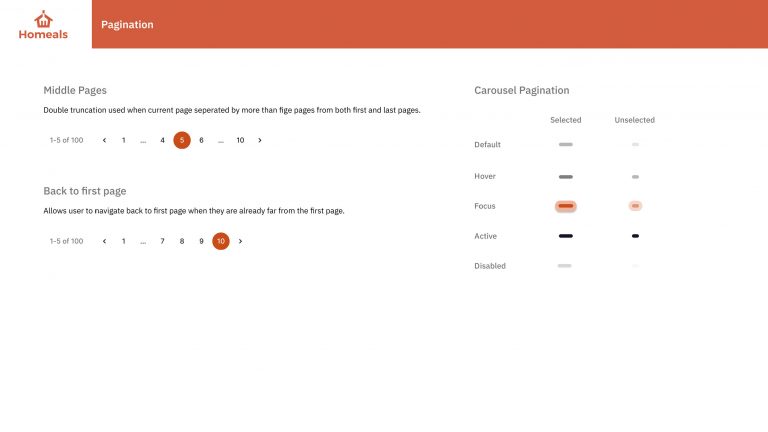
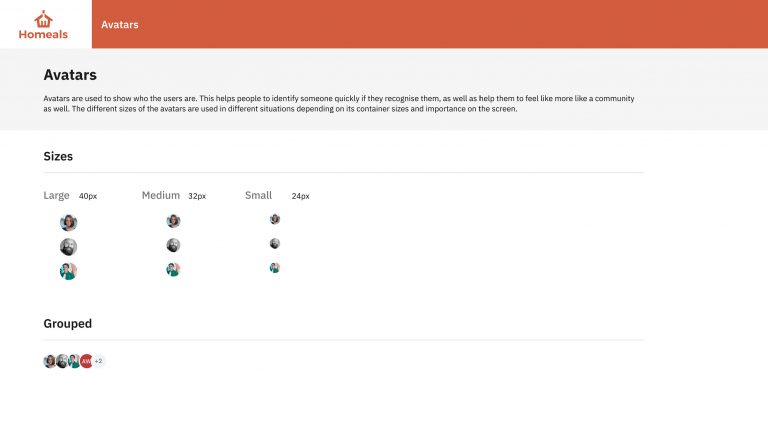
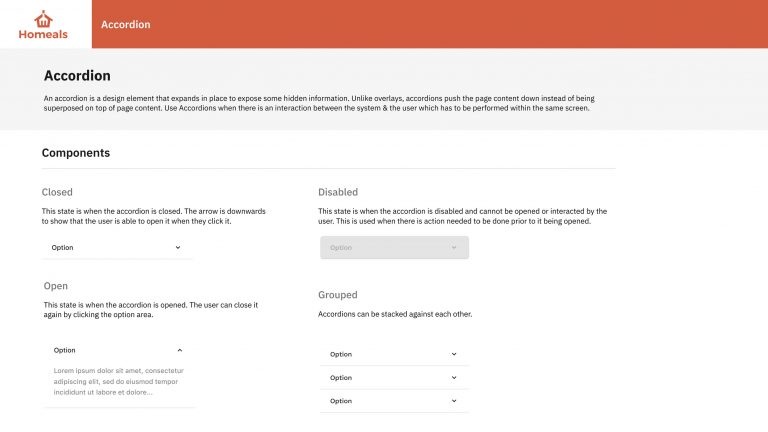
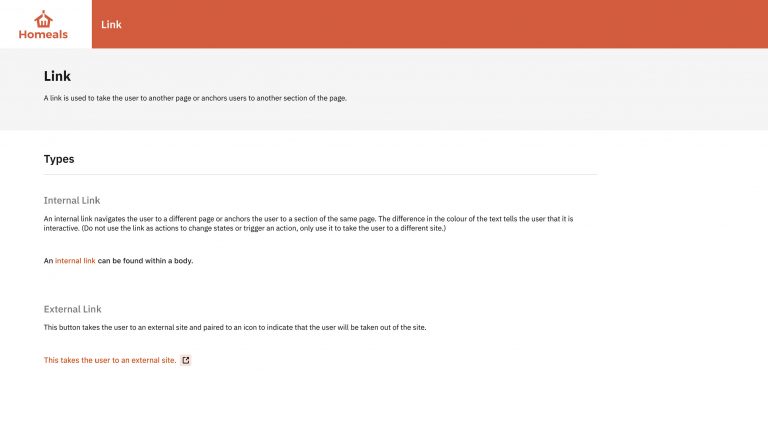
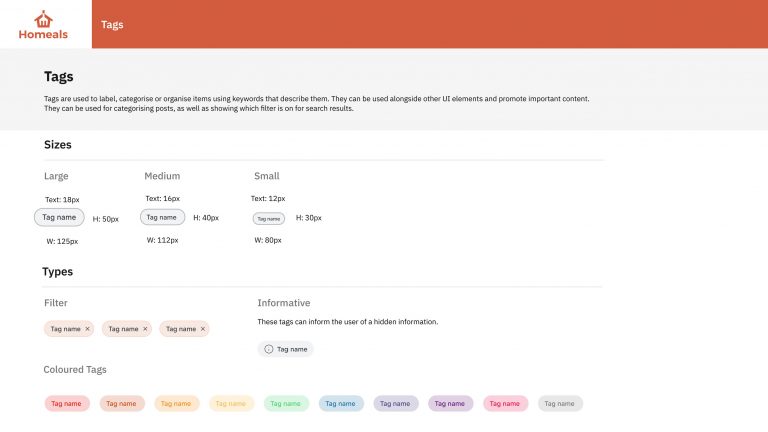
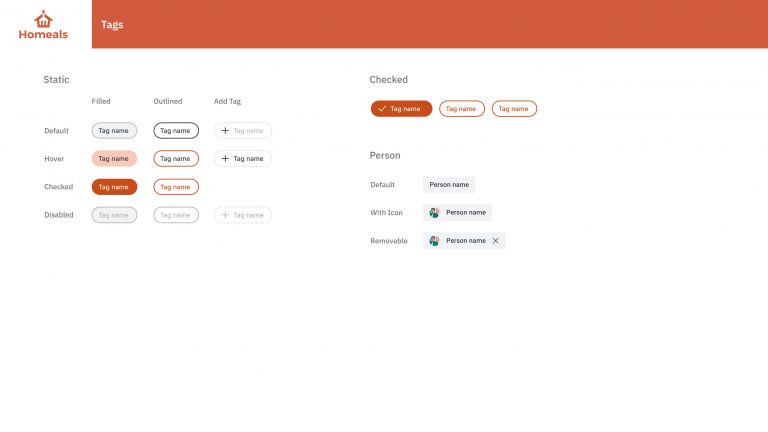
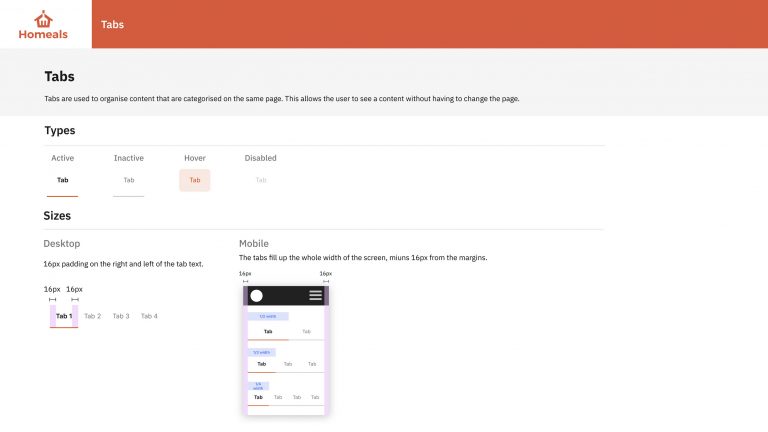
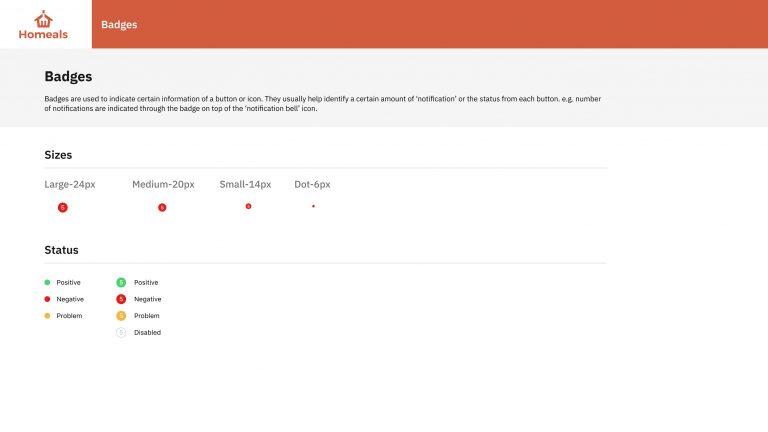
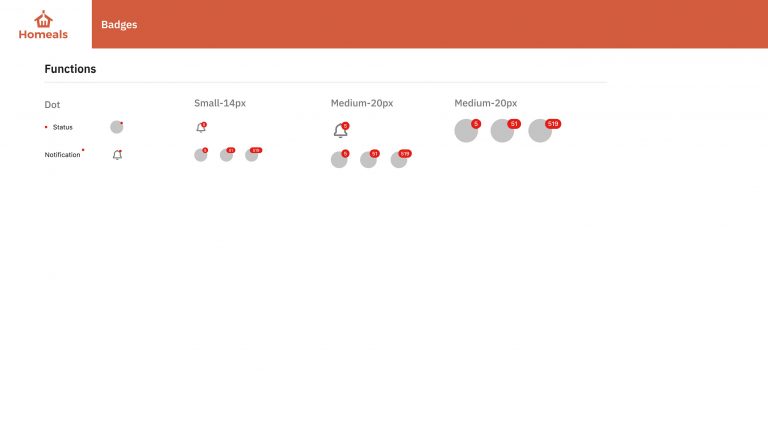
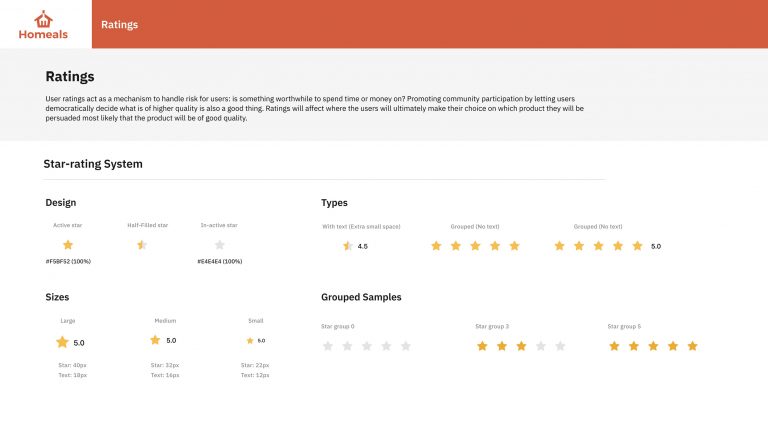
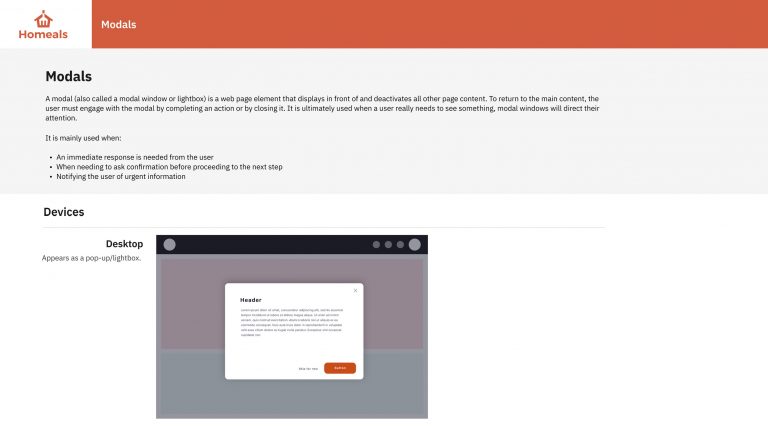
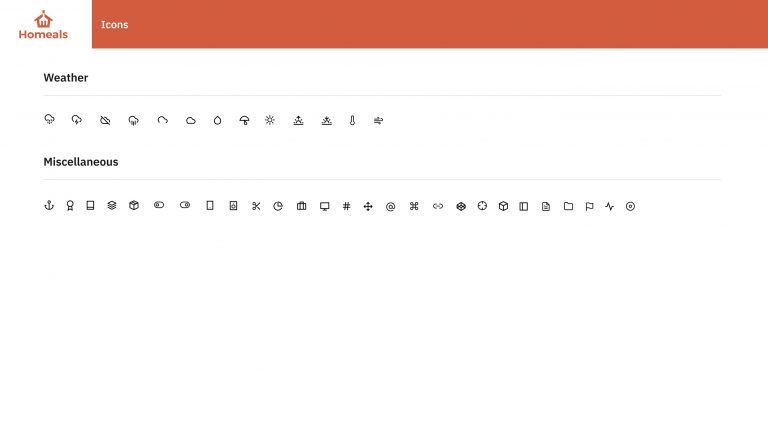
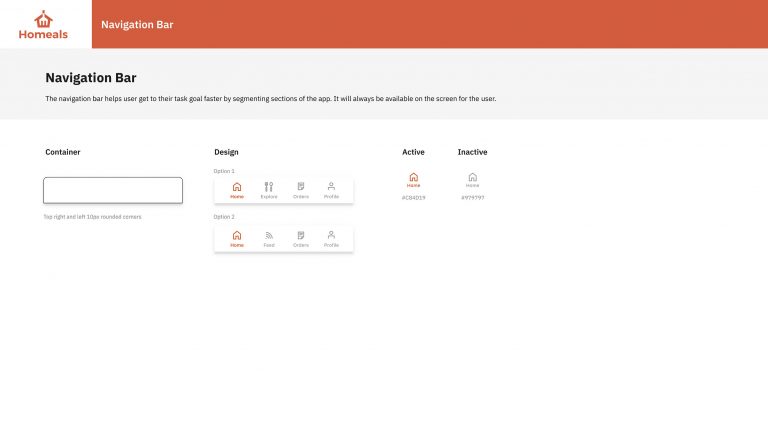
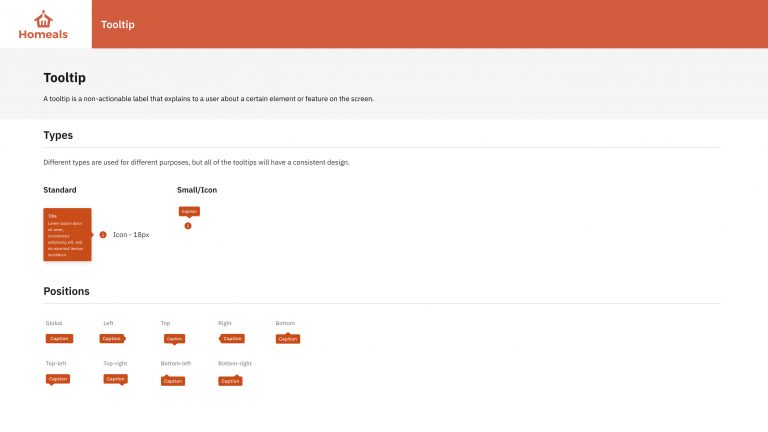
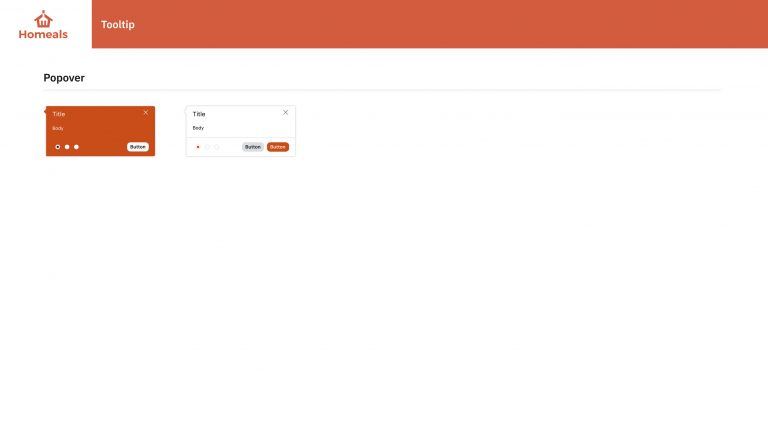
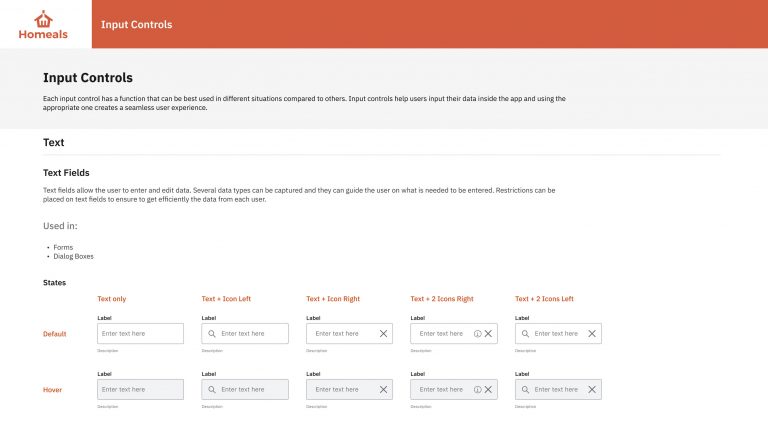
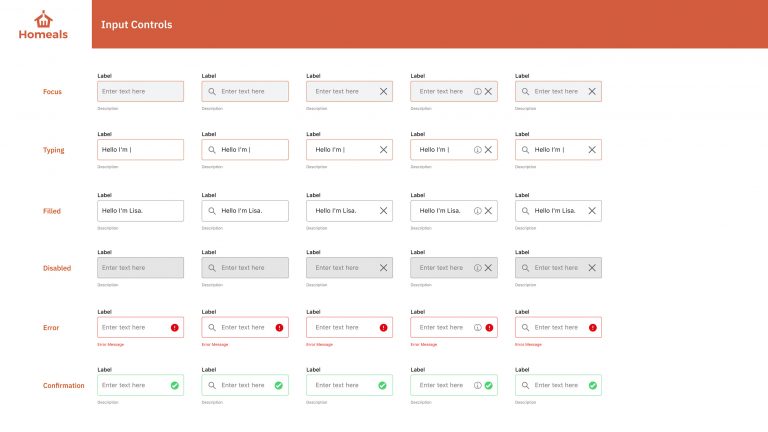
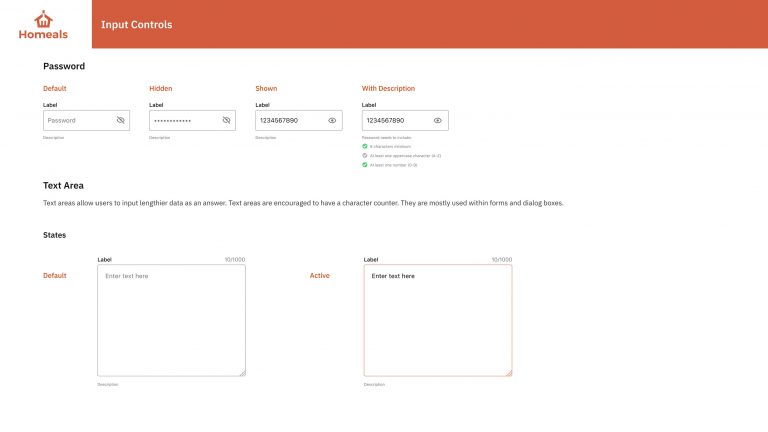
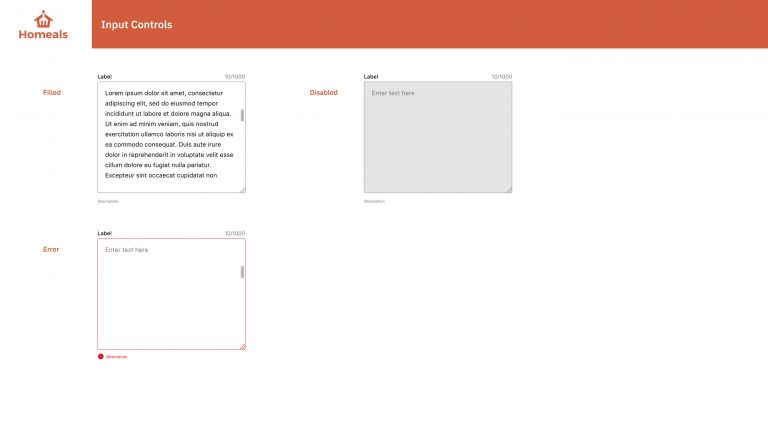
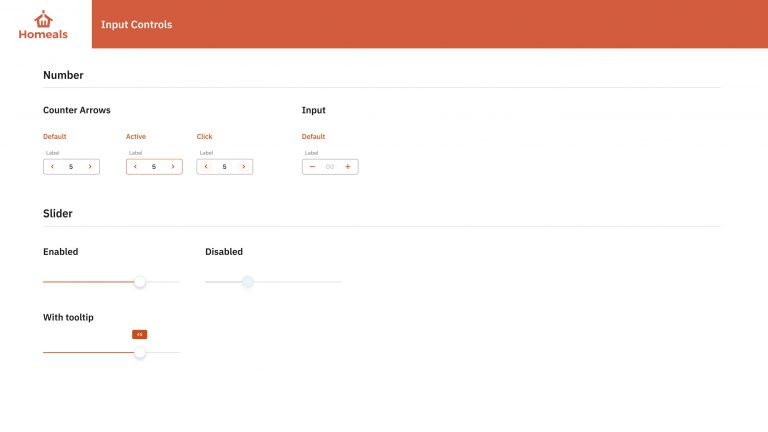
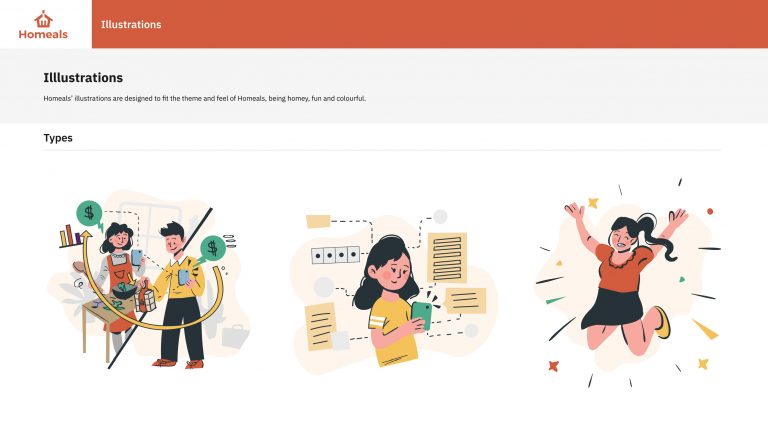
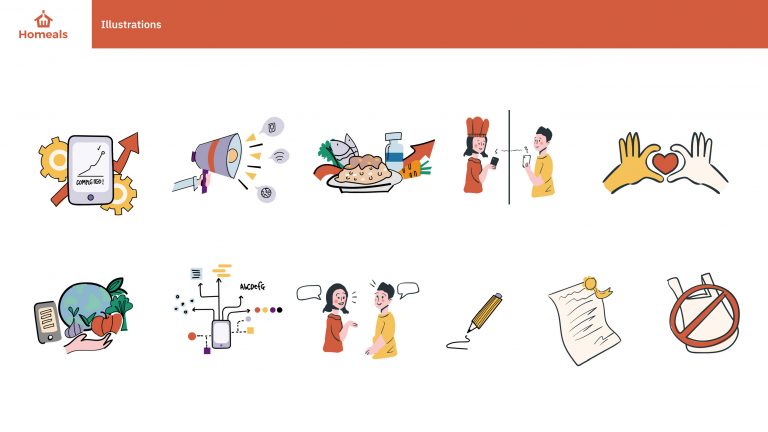
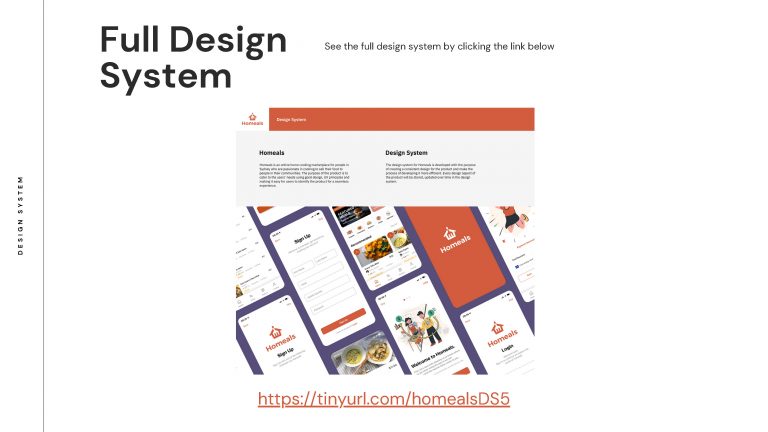
The Design System for Homeals can be easily used to create any page and developers can use it when developing the product as well.

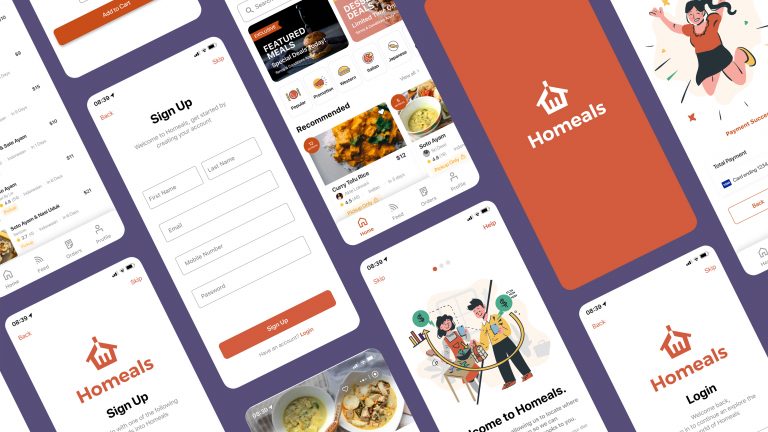
High-Fidelity Design
Interaction Design
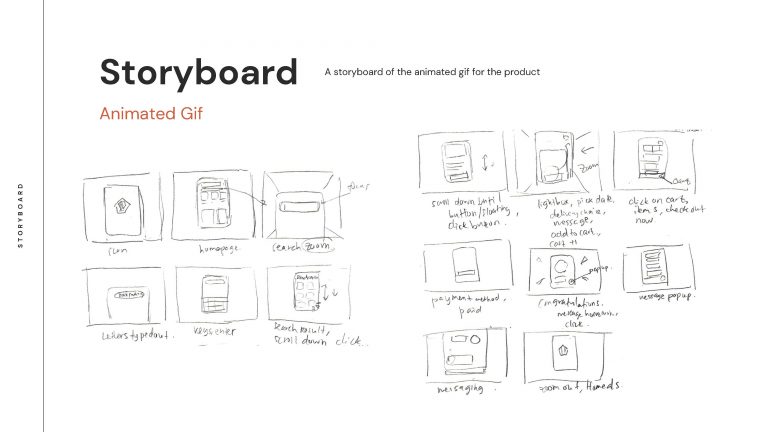
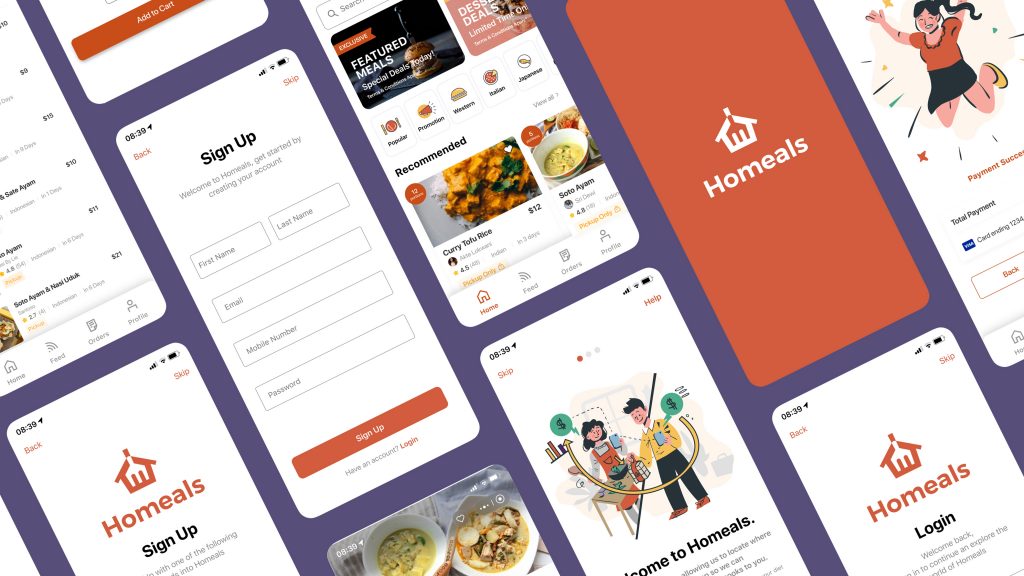
The final outcome of the animation differs from the storyboard. This choice is made to show that the product is customisable for each user and that their experience will be prioritised. Therefore the chatting and messaging flow was changed with an onboarding flow. The final outcome shows how the customer will begin their journey in Homeals until they successfully purchase the product.
Website Design
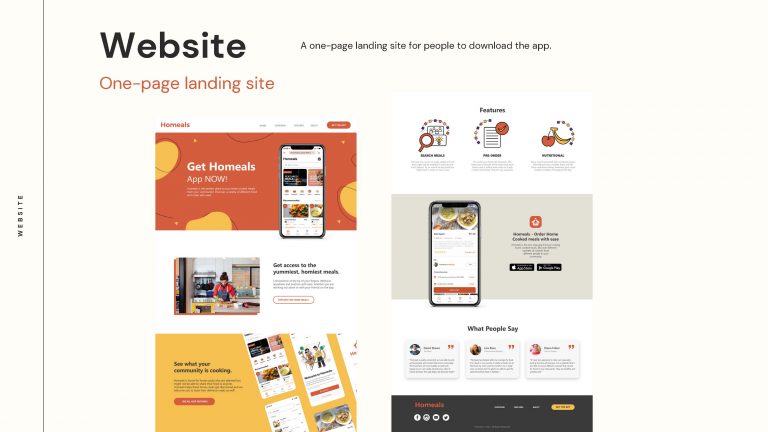
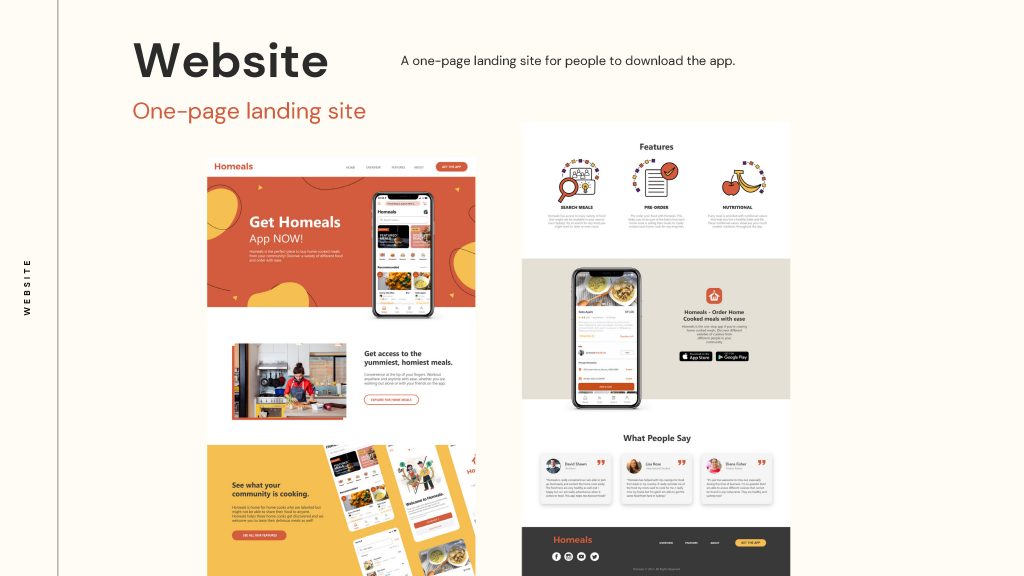
The one-page landing site for Homeals is meant to be a place where customers can read about what Homeals does and download the app. The design is completely original and currently has blank sections as the high-fidelity prototype has not been completed. The website lists fully what the features of Homeals are and promotes the app so that customers would be interested to download it. Future additionals could be a section that features the home cooks.
Packaging Design
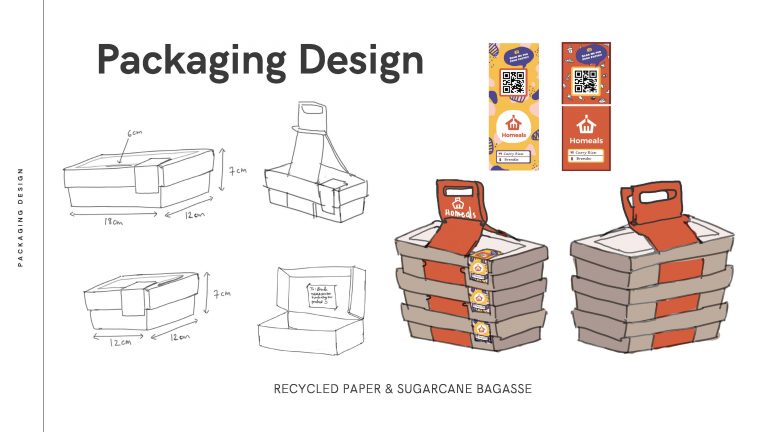
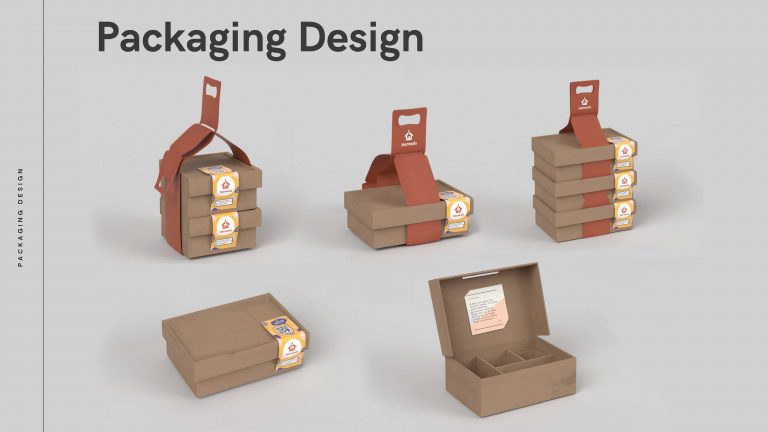
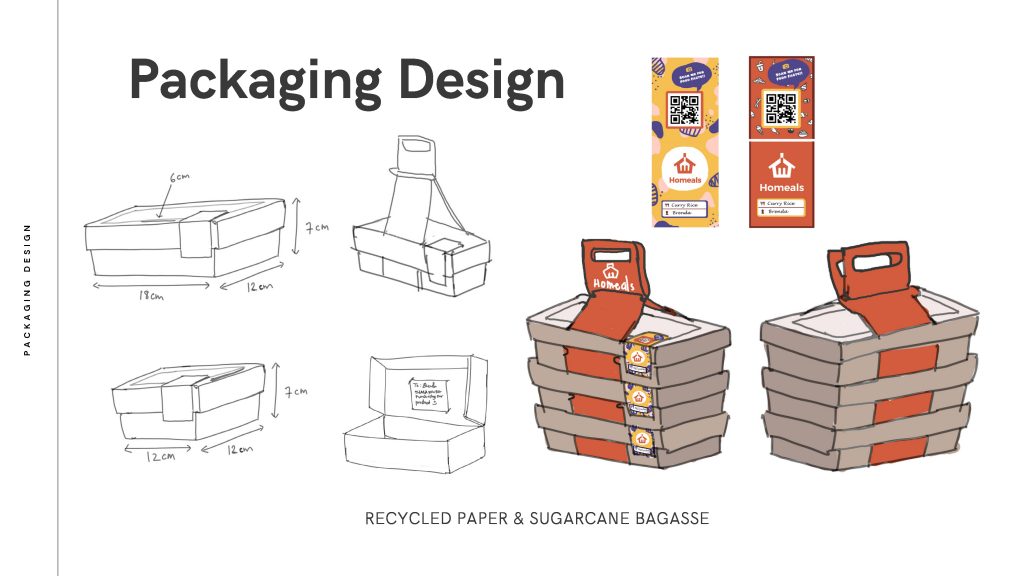
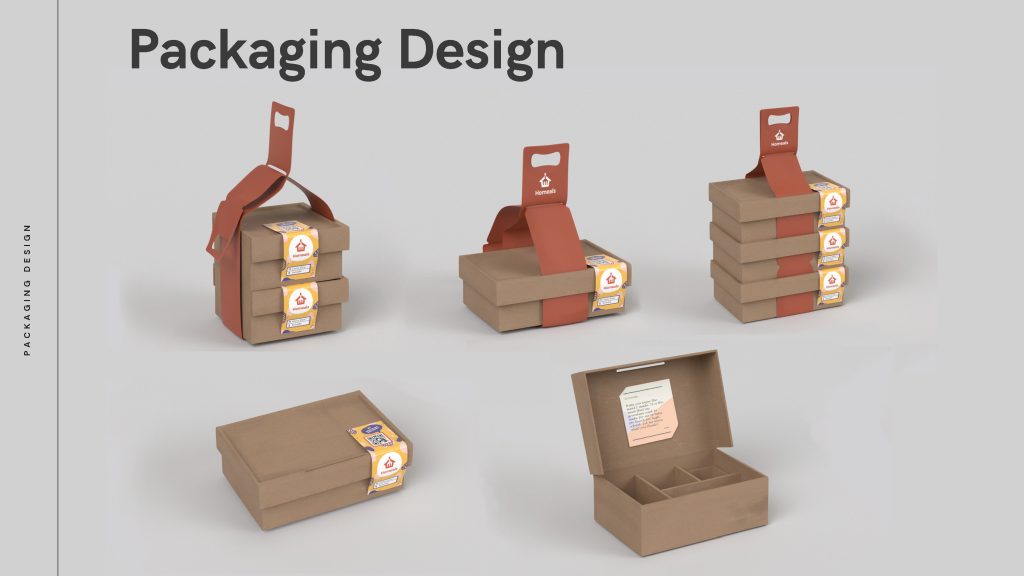
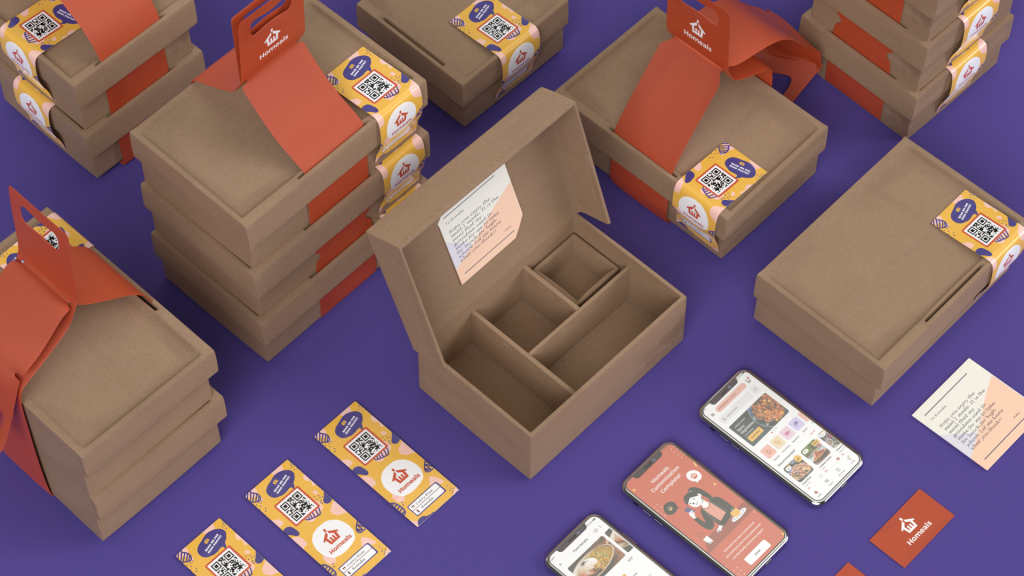
The packaging for Homeals is made from recycled paper and sugarcane bagasse. They are both compostable and doesn’t take long to fully decompose. The special design is the handle. Compared to paper bags, the handle uses materials more efficiently with the same function. It can hold up to 3 boxes, big or small that can be mixed and matched. The boxes covers have holes that lets the handle go through easily. The boxes will be closed up by Homeals stickers that have QR codes that can be scanned by the Homeals app. This let’s the customers see the nutritional facts of each food. Home cooks are also able to write down who the meal is for and what the meal is to make it easy to identify which box is who’s. Home cooks are encouraged to write handwritten or printed personal notes about the food or thank you notes to the customers. The Homeals packaging is provided to any home cook who join the app and have orders on the app. Through the pre-order system, it is possible to see how many orders they are getting and lets the efficient amount of packaging to be delivered.
Here for Good
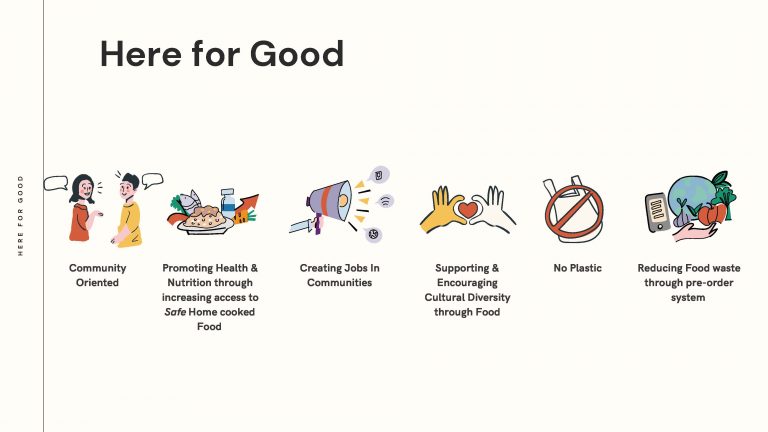
Homeals focuses on how we will make an impact of being ‘Here for Good’. The platform will help to bring communities together through food and promotes cultural diversity as well as nutritional value. Many areas in the food services industry can also be improved such as reducing plastic waste in takeaway food as well as food waste through the pre-order system.
Extra: Publication Findings
Cuisine & Culture in Australia (Research for Viability of Homeals)
Twenty first century Australia has embraced a variety of ethnic cuisines and is part of the undeniable benefits of cultural diversity and globalisation. With 26 percent of Australians being born overseas and an additional 20 percent having either one or both parents born overseas, the successive waves of migrants to Australia have had a significant impact on the Australian foodscape as new foods were introduced.
Entrepreneurship Opportunities embraced in Ethnic Communities. (Research for Viability of Homeals)
With the maturity of the online businesses over the years, there has been a growing stream of studies that consider online home-based businesses. Anwar and Daniel’s findings suggest that online home based-businesses offer opportunities to leverage existing skills or experience. This opportunity can even offer those without IT skills. Findings also suggest that online home-based businesses offer opportunities to leverage existing skills or experience. The link between cooking cultural food and online home businesses can possibly be an opportunity for many, as there will be those who can have the skills to sell cultural foods and a demand from those who want to buy.
Health & Sustainability in the Food Industry (Research for Viability of Homeals)
An individual’s food choice can be influenced by different factors including the environment characteristics, dietary behaviours and socioeconomic circumstances. People in different parts of Sydney that live in places with more fast food chains tend to buy food from Food and culture walk hand-in-hand. One of the first things newly arrived migrants need to do after they arrive in Australia is to find out the type of food that is available and whether they can purchase familiar or traditional food similarly prepared to the ones in their home countries. From the research, a lot of the primary food sources were also supermarkets and food outlets. For various reasons beyond the cost, convenience and distance is also a huge factor to how people buy food.
The food services industry has a crucial responsibility towards the environment. With food waste and plastic packaging waste causing soil degradation, water and energy consumption, eutrophication and water pollution, biodiversity loss, introduction of hazardous chemicals, and waste disposal, it is crucial more than ever to consider environmental sustainability. Around 1.6 billion tonnes of food are annually wasted.
Currently, the food system needs to transition more towards a more sustainable direction. The food products that consumers buy from online involve the transporting, storing, preparing and packaging. The feasibility of using mobile apps to facilitate the consumption-end sustainable transitions of food practices show that mobile apps play a huge part. Incorporating information on health, sustainability and other knowledge helps consumers to understand good and sustainable food practices.
Note: The project needs to take consideration on how the brand will be more effective in terms of delivery, distance and convenience. As a “Here for Good’ brand, it is essential for Homeals to keep incorporating sustainability in the app to help the food system to head towards a more sustainable direction.
Digital Technology & Health (Research for Viability of Homeals)
Digital technologies influence a lot of sectors of the global and national economies, including agriculture, food and beverage manufacturing, food retail and restaurants, amongst many others. They also influence the availability and pricing of products, improve efficiency to reduce food loss and food waste and broaden the array of healthy and affordable choices available to enhance people’s diet quality and health. Indeed, digital technology plays a huge part in our world right now. Especially due to the convenience it has, an increasing amount of people will be using more of apps instead of going to restaurants and one of the biggest factors that will make a company competitive will be the ease of use of the product. By making use of the patterns and methods used in existing companies could be an advantage.
Food-system stakeholders are using digital technologies in many ways to promote healthy diets and sustainable agrifood systems as well. In high-income countries, research has shown that online food shopping has the potential to encourage healthy choices, reduce unhealthy impulse purchases by using effective nutrition labelling strategies and overcome the food constraints faced by people with limited access to stores.
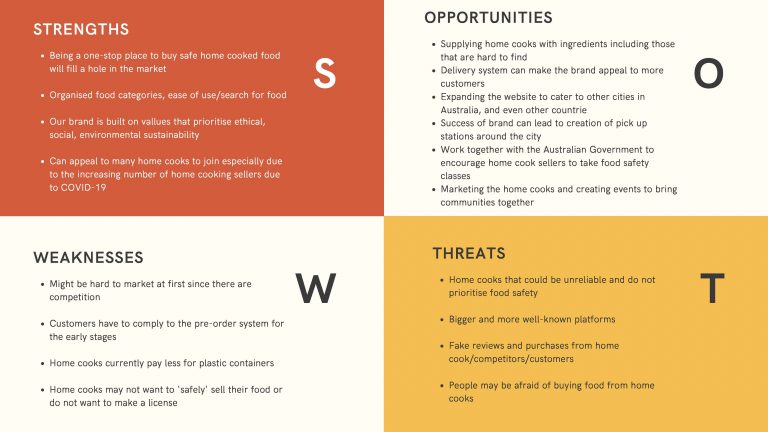
Extra: SWOT Chart